
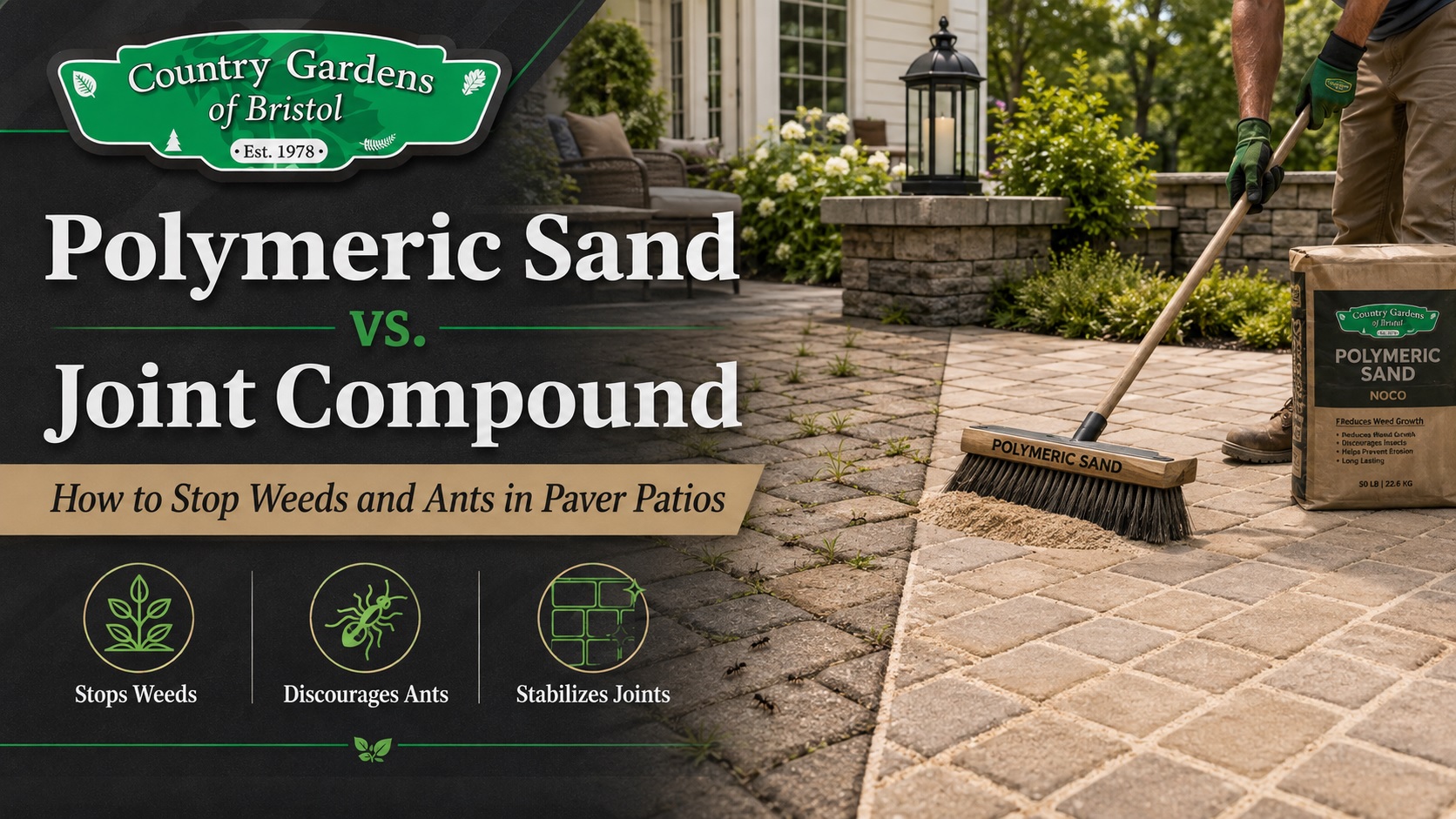
For most traditional interlocking paver patios, polymeric sand provides a strong balance of joint stabilization, weed resistance, insect resistance, and cost. Resin-based joint compounds can be a better fit for wider joints, natural stone, permeable applications, or projects where wet-weather installation flexibility matters. Neither product permanently eliminates weeds or ants, but a properly prepared, fully filled, and correctly cured joint makes it far harder for weeds to establish and burrowing insects to disturb the patio. Modern polymeric products are specifically engineered to resist erosion from rain and freeze-thaw cycles while helping discourage weeds and ants.
At Country Gardens of Bristol, we look beyond the surface when restoring a paver patio. Failed joints are often a symptom of washout, settlement, moisture problems, poor activation, or years of normal New England weather exposure.
Replacing loose sand without correcting those conditions may only provide a temporary improvement.
Polymeric Sand vs. Joint Compound: What Is the Difference?
Polymeric sand combines calibrated sand with binding polymers. It is swept dry into paver joints and then activated with controlled watering. Once cured, the joint becomes firm while retaining some flexibility.
A resin-based joint compound uses calibrated aggregate combined with resin. Certain products cure through exposure to air and remain permeable, making them suitable for applications where drainage or wider joints are important. Alliance Gator’s Nitro Joint Sand, for example, is a ready-to-use sand-and-resin material that cures from the top of the joint downward and can be installed under wet or dry conditions.
For a typical concrete paver patio with narrow, uniform joints, polymeric sand is usually our starting point.
For natural stone, wider joints, permeable designs, or specialty restorations, a resin joint compound may make more sense.
What Is the Best Polymeric Sand for a Paver Patio?
The best polymeric sand for paver patio restoration is not simply the strongest bag on the shelf.
We match the joint material to:
- Paver type
- Joint width
- Joint depth
- Base construction
- Drainage
- Pedestrian or vehicle traffic
- Existing surface condition
- Weather during installation
For example, Alliance Gator currently lists polymeric products designed for traditional paver installations with joint widths ranging from narrow joints up to several inches, depending on the specific product. The manufacturer also stresses that the joints and paver surfaces must be dry before application.
A product designed for a 1/8-inch concrete paver joint may not be appropriate for a broad natural-stone joint.
How Polymeric Sand Helps Stop Weeds
Homeowners searching how to keep weeds out of paver joints sometimes assume weeds are growing upward from deep beneath the patio.
Many weeds actually establish when airborne seeds, soil, leaves, and organic debris collect in deteriorated joints.
A dense polymeric joint leaves less loose material where seeds can establish. Manufacturers also specifically market polymeric sand as helping prevent weed growth and damage from burrowing insects.
Joint stabilization works best when combined with good patio maintenance:
- Sweep away leaves and soil
- Correct low areas that stay wet
- Repair missing joint material
- Keep patio edges secure
- Avoid blasting joints with excessive pressure
No joint product can stop seeds from landing on top of a patio, so routine cleaning still matters.
Why Ants Become a Paver Joint Problem
Ant activity becomes especially noticeable when ordinary joint sand loosens.
Burrowing insects can move loose material upward, leaving small piles between pavers and gradually opening the joint. Once joints become shallow, rain can remove even more material.
Polymeric sand helps because the activated binder creates a firmer joint than loose masonry sand. Alliance Gator identifies damage from burrowing insects and erosion from rain and freeze-thaw conditions among the problems its polymeric joint products are designed to help prevent.
How to Apply Polymeric Sand Correctly
Learning how to apply polymeric sand starts with preparation, not watering.
1. Remove Failed Joint Material
Old sand, weeds, loose debris, and deteriorated material should be removed deeply enough for the replacement product to achieve its required joint depth.
2. Let the Patio Dry
Polymeric sand should be installed only when the paver surface and joints meet the selected manufacturer’s moisture requirements.
Applying dry polymeric sand over damp pavers can activate binder prematurely and leave residue across the surface.
3. Fill and Compact the Joints
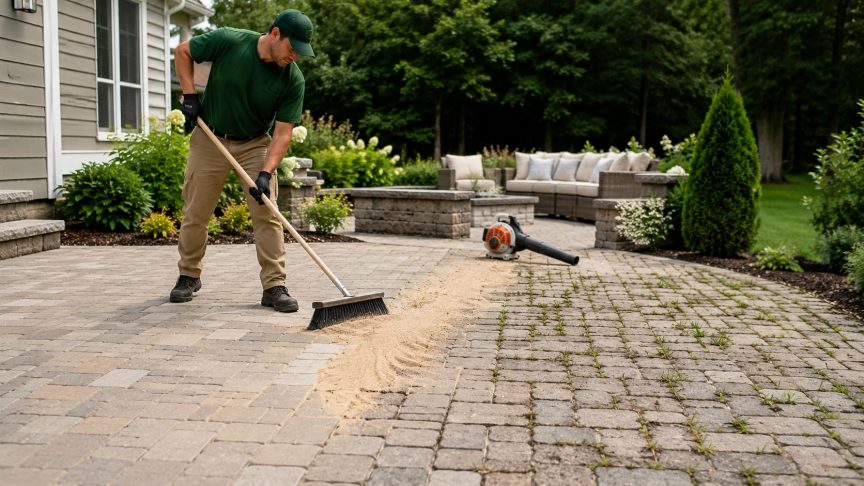
Sweep material across the patio and work it completely into the joints.
For products requiring mechanical compaction, vibration helps settle sand deeper so joints do not appear full at the top while remaining hollow below.
4. Remove Excess Sand
Sand left on paver faces can create unwanted residue once water activates the polymers.
The surface should be cleaned according to product instructions before activation.
5. Activate With Controlled Water
Activation is one of the most important steps.
Too little water can leave polymers incompletely activated. Too much water can wash binder from the joints.
Techniseal’s installation guidance similarly calls for controlled showering of the surface during polymer activation rather than uncontrolled flooding.
What Happens After a New England Rain?
Connecticut patios face repeated rain, snow, freeze-thaw movement, and spring runoff.
Properly cured polymeric sand is designed to resist erosion, but installation timing matters. Some current rapid-setting products can become rain-safe relatively quickly, while other products and overlay installations require much longer dry periods. Always follow the exact technical data sheet rather than assuming every polymeric sand has the same cure time.
If heavy rain arrives before proper activation or curing, we may see:
- Joint washout
- Low joints
- Polymer residue
- Uneven hardening
- Loose sand collecting downhill
Those areas should be evaluated before simply adding another layer of material.
What About White Haze and Efflorescence?
White discoloration is not always polymeric sand haze.
Concrete pavers can naturally develop efflorescence, which results from soluble salts reaching the surface as moisture moves through masonry materials and evaporates.
Before re-sanding or sealing a patio, existing staining should be properly identified and cleaned with products compatible with the paver manufacturer.
Restoration is also the right time to inspect drainage, settlement, loose edging, and base movement.
Our hardscaping services include paver patios, walkways, retaining walls, outdoor living areas, and related hardscape improvements throughout the Bristol area. Country Gardens notes that proper hardscape construction depends on both visible materials and the supporting structure beneath them.
For more detail on what sits below interlocking pavers, our related guide to frost-proof paver sub-base construction explains why proper aggregate depth and preparation are especially important under Connecticut freeze-thaw conditions.
Restore the Joints Before the Patio Starts Moving
Missing joint material may look cosmetic at first, but open joints allow more water, debris, weeds, and insect activity into the paver system.
We recommend restoring the patio before widespread joint loss turns into loose pavers, uneven edges, or larger repair areas.
Schedule a patio restoration and paver re-sanding service with Country Gardens of Bristol.