
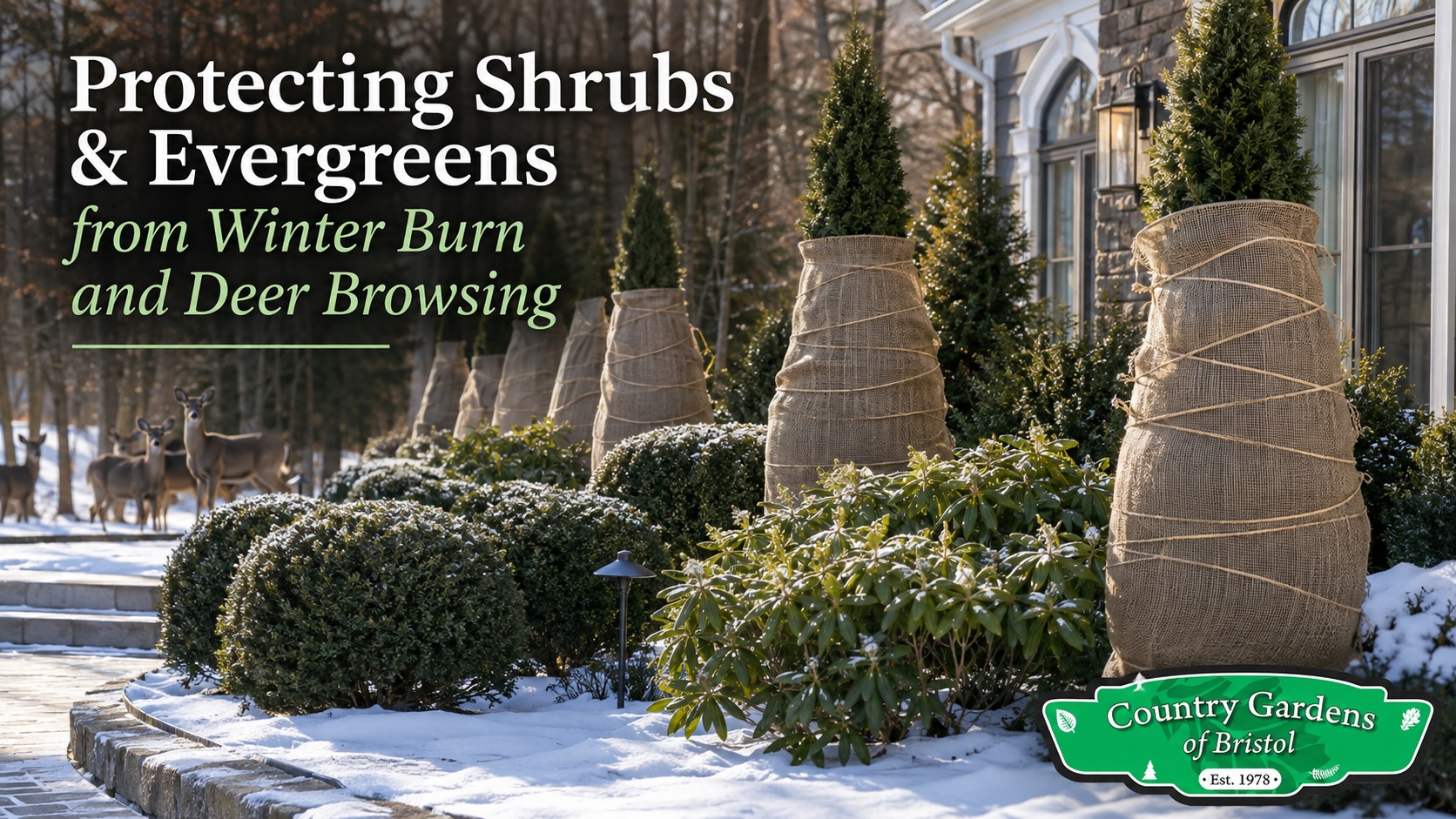
Broadleaf evergreens like rhododendrons, boxwoods, and hollies can dry out during Connecticut winters when frozen soil stops roots from replacing moisture lost through foliage. Anti desiccant spray for evergreens can help reduce water loss on some broadleaf evergreens, while burlap wind screens, proper fall watering, mulch, deer fencing, and deer repellent spray for landscaping help protect expensive shrubs before winter stress hits. UMass Extension notes that anti desiccant sprays create a protective waxy coating that slows transpiration, and burlap barriers can reduce winter injury from wind and sun.
Why Winter Burn Happens
Winter burn is a moisture problem. Evergreens keep foliage through winter, so leaves and needles can still lose water on cold, sunny, windy days. When the ground freezes, roots cannot always pull enough moisture back up to replace that loss.
That is why exposed shrubs often turn brown on the side facing winter sun or wind. Rhododendrons, boxwoods, hollies, arborvitae, junipers, yews, and newer evergreen plantings can all show damage after a harsh Central Connecticut winter.
At Country Gardens of Bristol, our team helps homeowners protect softscape investments through smart landscape design, seasonal plant care, irrigation planning, and winter preparation. Country Gardens of Bristol provides residential landscaping, landscape design, hardscaping, irrigation, hydroseeding, and seasonal services for Bristol and nearby Connecticut properties.
Anti Desiccant Spray for Evergreens
Anti desiccant spray, sometimes called anti transpirant spray, is designed to reduce moisture loss from foliage. It is most useful on broadleaf evergreens such as:
- Rhododendrons
- Holly
- Boxwood
- Mountain laurel
- Some newly planted evergreens
These sprays should be applied when temperatures and label conditions allow, usually before deep winter weather settles in. They are not a cure for drought stress, poor planting, root damage, or plants already struggling in the wrong location.
Our approach is simple: anti desiccant spray works best as part of a winter protection plan, not as the only step.
How to Protect Arborvitae From Snow Damage
Arborvitae can bend, split, or open under heavy snow. They are also a favorite winter food source for deer in many neighborhoods. UConn notes that deer can browse heavily on certain arborvitae cultivars, and repellents may be needed to deter browsing.
To protect arborvitae from snow damage:
- Water deeply in fall before the ground freezes.
- Add mulch around the root zone without piling it against trunks.
- Use soft ties to gently support upright stems when needed.
- Install burlap screens on exposed sides.
- Brush off heavy snow with an upward motion after storms.
- Avoid shaking frozen branches, which can snap.
For rows along driveways, road edges, or windy property lines, burlap fencing can reduce both wind burn and salt exposure.
Deer Repellent Spray for Landscaping
Deer pressure rises in winter when natural food is limited. Iowa State Extension notes that deer often feed on lower branches of arborvitae, pines, and other evergreens during winter, especially when food is scarce.
A deer protection plan may include:
- Deer repellent spray rotation
- Temporary winter fencing
- Burlap wrap around vulnerable shrubs
- Netting around specimen plants
- Deer-resistant plants near property edges
- Better plant placement during future designs
Repellents work best when applied before browsing starts and refreshed according to the product label. For high-value shrubs, fencing or physical barriers provide stronger protection than spray alone.
Protecting New Shrubs Before Winter
New plantings need extra care because roots have not fully established. Fall watering is one of the most important steps. An irrigation system can help protect planting investments during the growing season by delivering more consistent moisture to lawns, beds, and foundation plantings.
Before winter, we recommend:
- Deep watering until the ground begins to freeze
- Removing dead or weak branches
- Mulching root zones 2 to 3 inches deep
- Keeping mulch away from trunks and stems
- Installing burlap on windy exposures
- Protecting young trunks from animal damage
- Avoiding late-season fertilizer that pushes tender growth
When Burlap Wrapping Makes Sense
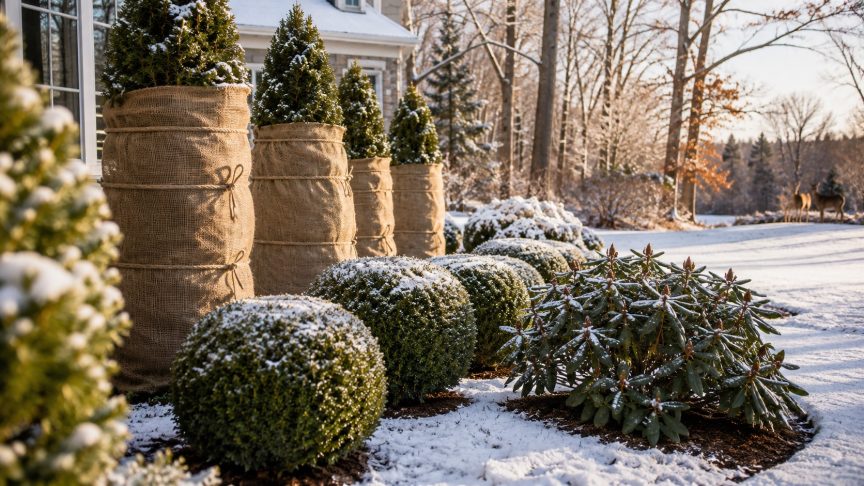
Burlap is useful when shrubs face wind, road salt, deer, or heavy snow exposure. The best method is often a burlap screen around stakes rather than tight wrapping against foliage. This creates a buffer while still allowing airflow.
Use burlap for:
- Arborvitae rows
- Newly planted evergreens
- Boxwoods near walkways
- Rhododendrons on windy corners
- Foundation shrubs exposed to roof runoff or salt
- Specimen plantings with high replacement value
Remove burlap in spring once severe winter stress has passed.
Fall Landscape Winterization for CT Homes
Bristol, Farmington, Plainville, Southington, Wolcott, Burlington, Plymouth, and nearby Central CT properties all face freeze-thaw cycles, deer browsing, snow loading, and winter wind exposure. A fall shrub protection visit can prevent avoidable spring replacements.
Country Gardens of Bristol can help evaluate:
- Plant health before winter
- Deer browsing risk
- Burlap placement
- Mulch depth
- Irrigation needs
- Wind exposure
- Snow load risk
- Replacement planning for damaged shrubs
For winter burn prevention, deer repellent spray for landscaping, arborvitae snow protection, or fall landscape winterization, contact Country Gardens of Bristol to protect shrubs and evergreens before harsh weather arrives.
FAQs
What is anti desiccant spray for evergreens?
Anti desiccant spray is a protective coating that helps slow moisture loss from evergreen foliage during winter. It is most often used on broadleaf evergreens like holly, boxwood, and rhododendron.
How do you protect arborvitae from snow damage?
Water well in fall, mulch the root zone, loosely tie upright stems if needed, install burlap wind screens, and gently brush heavy snow upward from branches after storms.
Does deer repellent spray for landscaping work?
Deer repellent spray can help reduce browsing when applied before damage starts and refreshed as directed. For high-value plants, fencing or burlap barriers often provide stronger winter protection.
Which evergreens get winter burn?
Rhododendrons, boxwoods, hollies, arborvitae, junipers, yews, and newly planted evergreens can all suffer winter burn, especially in sunny, windy, exposed areas.
Who provides shrub winterization in Bristol CT?
Country Gardens of Bristol provides landscape design, seasonal plant care, irrigation, and property services for Bristol and nearby Central Connecticut homeowners.