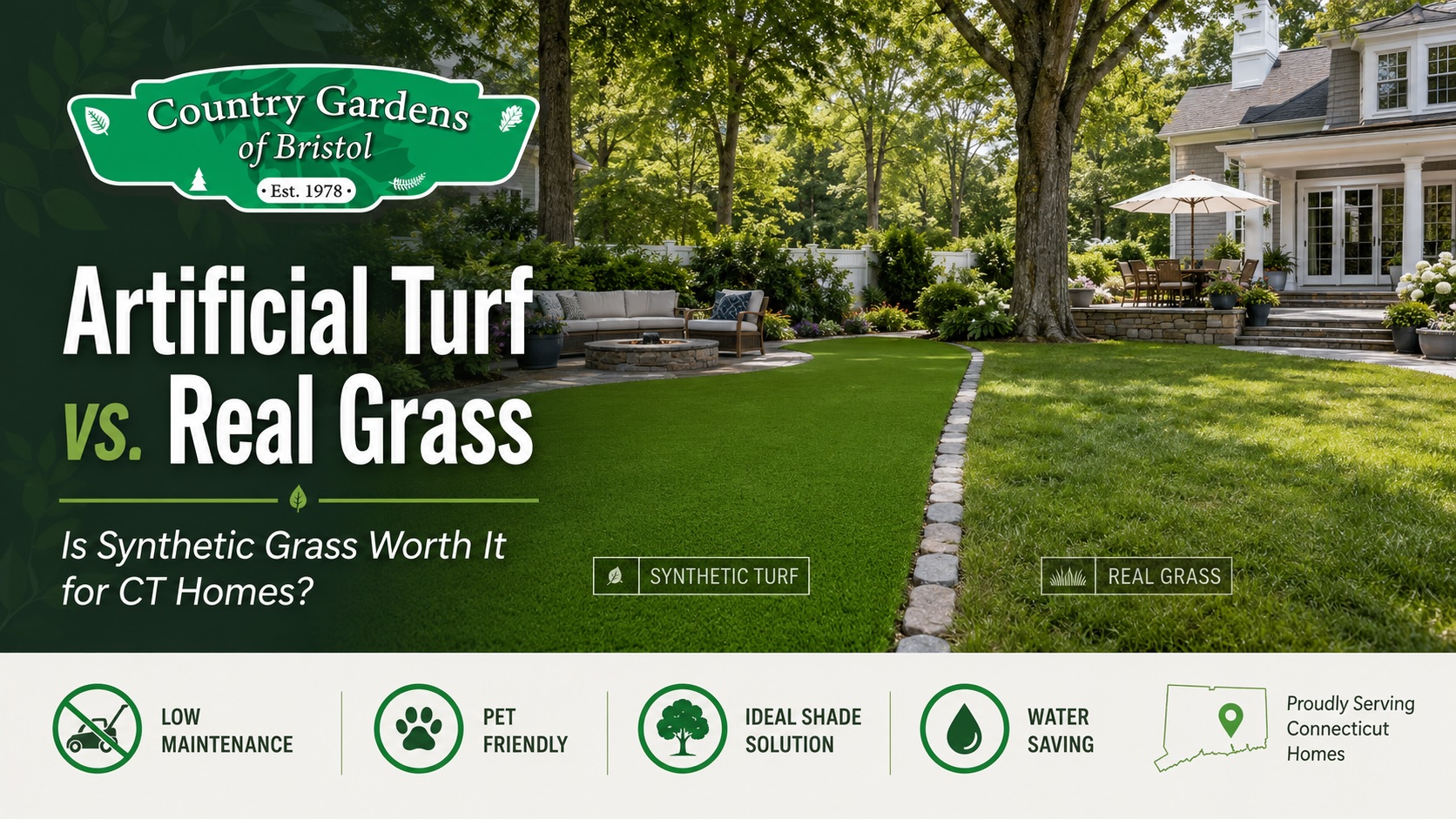
Artificial turf can be worth the investment for Connecticut homeowners dealing with deep shade, muddy pet areas, compacted soil, narrow side yards, or high lawn-maintenance costs. A properly installed system requires excavation, drainage planning, a compacted stone base, secure perimeter edges, and correctly joined seams. Natural grass costs less initially and provides cooling and environmental benefits, while synthetic grass offers predictable appearance, reduced watering, and freedom from mowing, fertilizing, aerating, and overseeding.
New England homeowners often picture artificial grass as the stiff, shiny indoor-outdoor carpet used decades ago. Modern landscape turf is designed differently, with realistic blade colors, supportive thatch fibers, permeable backing, infill, and an engineered base.
At Country Gardens of Bristol, we install synthetic lawns around the way each property will be used. That may include a shaded backyard, dog run, play area, pool border, courtyard, or custom putting green.
Artificial Turf Installation Pros and Cons
The right choice depends on the condition of the yard, expected use, budget, and level of maintenance the homeowner wants.
Benefits of Artificial Turf
Artificial turf offers:
- No routine mowing or overseeding
- No fertilizer needed for grass growth
- Reduced irrigation demand
- Better control of mud and worn pet paths
- Consistent appearance in shaded areas
- A usable surface during more of the year
- Clean transitions around patios and walkways
Synthetic grass does not require water to grow, although occasional rinsing may be needed for pet areas or surface cooling.
Drawbacks to Consider
Artificial turf has a higher upfront cost than seed or sod. It can also become warmer than living grass in direct summer sun and still requires leaf removal, brushing, rinsing, and occasional cleaning.
Natural turf provides benefits that synthetic material cannot duplicate. Healthy grass supports water infiltration, helps control erosion, adds organic matter to the soil, and cools the surrounding area through evapotranspiration.
For many properties, the best solution is not an entirely synthetic yard. A thoughtful landscape design may combine artificial turf with trees, planting beds, natural lawn areas, patios, and pollinator-friendly landscaping.
Solving the Connecticut Shade Problem
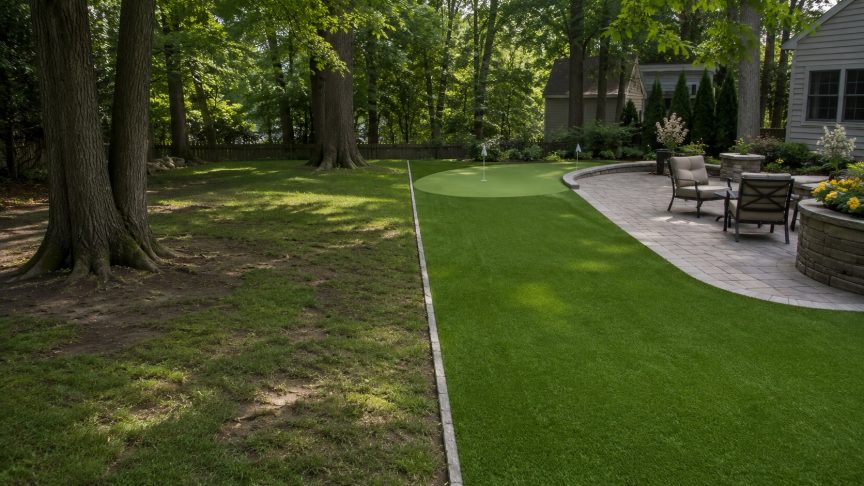
Grass needs adequate light to produce the energy required for healthy growth. Under dense tree canopies, turf often develops shorter roots, lower shoot density, reduced vigor, and thin coverage. Even shade-tolerant seed blends can struggle in areas receiving little direct sunlight.
This problem is common beneath mature maple and oak trees, between closely spaced homes, and along north-facing fences.
Artificial turf does not need sunlight for growth, so it can create consistent coverage where repeated seeding has failed. It can also reduce the muddy areas that form when sparse grass exposes the soil.
Tree roots still require careful planning. We avoid cutting major roots or making substantial grade changes around established trees. Large tree roots often extend beyond the canopy, and construction compaction or sudden grade changes can damage them. A tree ring, flexible border, or natural planting area may be incorporated instead of forcing turf tightly against the trunk.
Why Professional Base Preparation Matters
The visible grass fibers are only the top layer of a complete turf system. Installing synthetic grass directly over soil can lead to sinking, wrinkles, poor drainage, loose seams, and uneven areas.
Our artificial turf installation process generally includes:
1. Excavation and Subgrade Preparation
Existing sod, weeds, roots, and unstable organic material are removed. Many residential projects require excavation approximately 3 to 5 inches below the planned finish grade, although wet sites and high-traffic areas may need deeper preparation.
2. Grading and Drainage Planning
The exposed subgrade is shaped to direct water away from foundations, patios, and low spots. Additional drainage may be required when the native soil holds water.
3. Aggregate Base Installation
Compacted crushed stone creates a stable, free-draining foundation. The material is installed and compacted in controlled layers to reduce settling.
4. Perimeter Locking
The turf is secured against pavers, concrete, edging, or structural restraints. Perimeter locking keeps edges from lifting, spreading, or shifting under regular use.
5. Seaming, Infill, and Brushing
The turf grain is aligned before seams are joined and the perimeter is anchored. Selected infill adds ballast, supports the blades, and can help manage pet odors.
Our hardscaping services can also integrate turf with paver patios, walkways, retaining walls, and outdoor living areas.
What Is the Best Fake Grass for Dogs?
The best fake grass for dogs is not simply the softest product. A pet system needs:
- Permeable turf backing
- A free-draining stone base
- Durable, non-toxic fibers
- Odor-control infill
- Secure seams and edges
- Access for regular rinsing
Zeolite infill can help manage ammonia odors, while pet-safe enzyme cleaners support ongoing maintenance. The drainage system below the turf is just as important as the visible surface.
Backyard Putting Green Cost
Backyard putting green cost depends on the green’s size, contours, number of cups, turf type, drainage, access, fringe design, and surrounding hardscape.
Country Gardens of Bristol currently lists many standard residential turf and pet-area installations at approximately $14 to $26 per square foot. Custom putting greens and sites requiring complex drainage, precision grading, or difficult access may cost more.
Read our backyard putting green construction guide for more information about contours, base compaction, ball roll, and drainage.
Calculating the Long-Term Return
There is no universal payback period. Homeowners can estimate the return with this formula:
Turf installation cost ÷ annual natural-lawn expenses avoided = estimated payback period
Annual natural-lawn expenses may include mowing, fuel, fertilizer, weed control, aeration, overseeding, irrigation, equipment maintenance, and muddy-area repairs. Subtract the cost of synthetic turf cleaning and maintenance before calculating the final savings.
EPA WaterSense guidance confirms that efficient irrigation can reduce water use and utility expenses, which also shows why irrigation should be included when comparing the true cost of living grass.
Artificial Turf Installers in Connecticut
Country Gardens of Bristol provides synthetic lawn, pet turf, landscape design, drainage preparation, and putting green services throughout Bristol and nearby Connecticut communities, including Farmington, Southington, Plainville, Burlington, and Avon.
Homeowners searching for experienced artificial turf installers in Connecticut can contact our team to compare synthetic grass with hydroseeding, natural lawn restoration, or a combined landscape design.