
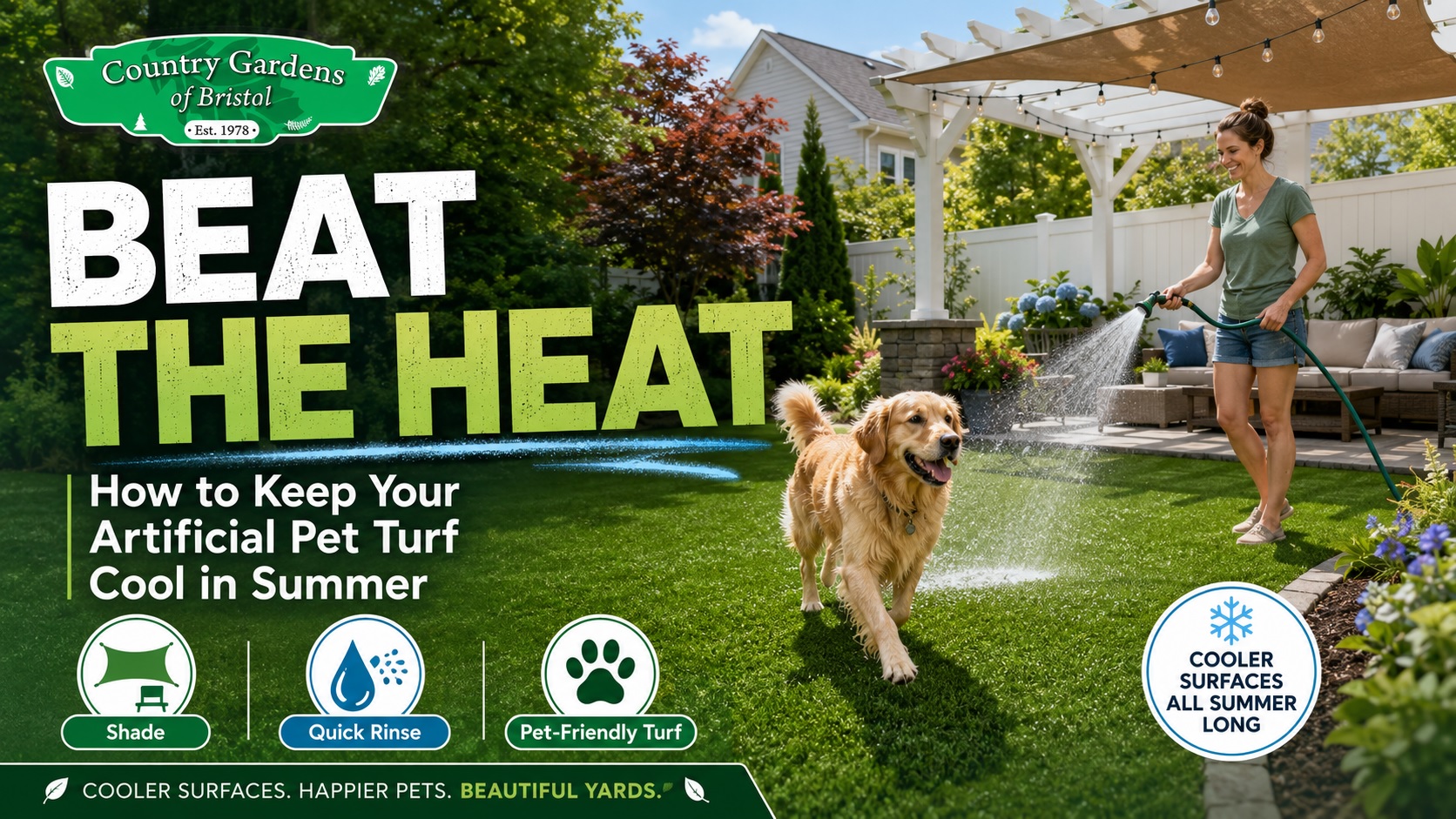
Artificial turf can get hotter than natural grass in direct summer sun, so dog owners should plan for shade, water rinsing, pet-safe infill, smart layout, and surface testing before playtime. Penn State’s Center for Sports Surface Research notes that synthetic turf can run 35°F to 55°F hotter than natural grass, while AAHA warns that hot outdoor surfaces can burn dog paws quickly. A cooler pet turf design uses shade, drainage, rinsing access, lighter infill options, and safe-use routines during peak heat.
Why Pet Turf Heat Matters in Connecticut Summers
Artificial turf is popular with dog owners because it stays green, drains well when properly installed, and avoids muddy paw prints after rain. At Country Gardens of Bristol, our artificial turf installations support lawns, pet areas, play spaces, side yards, and low-maintenance landscape upgrades across Bristol, CT and nearby Central Connecticut communities.
The concern is real, though. Artificial grass for dogs heat can become uncomfortable during hot, sunny afternoons, especially in open yards with little shade. The solution is not to avoid turf completely. The solution is to design and maintain it with pets in mind.
Why Artificial Turf Gets Hot
Natural grass cools itself through moisture and transpiration. Synthetic turf does not have that same biological cooling effect. Penn State reports that natural grass is commonly 75°F to 95°F on a hot day, while synthetic turf can be much hotter in direct sun.
For dog owners, that means the surface temperature matters more than the air temperature. AAHA notes that outdoor surfaces can be 40°F to 60°F hotter than the air, and an 86°F sunny day can make asphalt reach about 135°F, hot enough to burn paws in 60 seconds.
1. Use Shade as the First Cooling Strategy
Shade is the simplest way to create cool artificial turf for pets. A shaded turf area stays more comfortable than turf exposed to direct midday sun.
Good shade options include:
- Pergolas over dog run areas
- Sail shades near pet zones
- Shade trees around turf edges
- Fence-line shade planning
- Covered patio transitions
During design, our team looks at sun exposure, drainage patterns, and how pets actually move through the yard. Country Gardens of Bristol’s landscape design process includes evaluating sun exposure, drainage, soil, and functional layout before installation.
2. Rinse Turf Before Peak Use
A quick rinse can reduce surface heat for short periods and make the area more comfortable before pets go outside. Research on artificial turf cooling has shown that water and cooling systems can significantly reduce surface temperature compared with conventional turf.
For everyday use, rinse the turf before afternoon playtime, then test the surface with a hand before letting pets run. Good drainage matters here, so the turf base should move water away instead of trapping moisture or odor.
3. Choose Pet-Friendly Turf and Infill
Not all turf systems are the same. For pet areas, look for turf designed with strong drainage, softer blade texture, durable backing, and an infill option that supports comfort and odor control.
Ask about:
- Pet turf drainage rate
- Blade softness
- Heat-conscious infill options
- Odor-control infill
- Base stone depth and compaction
- Easy hose-down access
Country Gardens of Bristol builds artificial turf projects with proper base preparation and drainage support for durable, natural-looking surfaces.
4. Keep a Natural Cool Zone Nearby
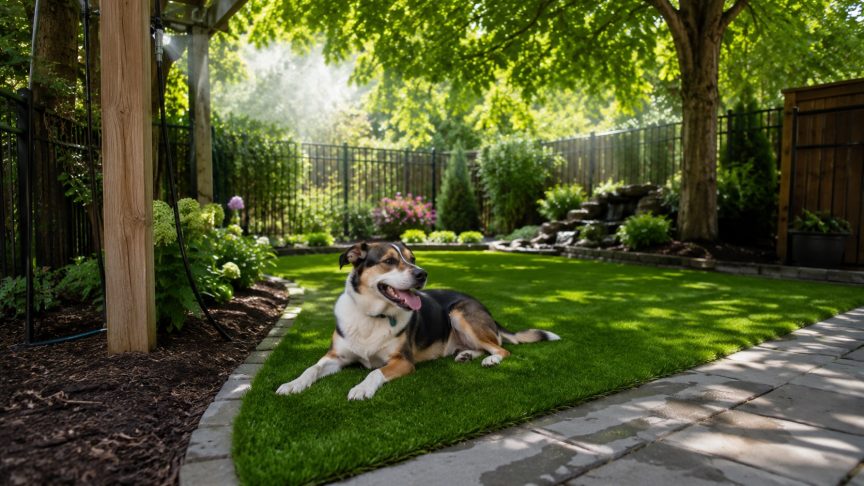
One of the best pet friendly landscaping tips is to design a hybrid yard. Use artificial turf where durability and cleanliness matter, then add shaded mulch beds, natural planting areas, stone paths, or a covered rest zone nearby.
This gives dogs choices. A pet can run on turf, rest in shade, and move away from any surface that feels too warm.
5. Test Before Playtime
To prevent burnt dog paws, test the surface before your dog uses it. Place the back of your hand on the turf for several seconds. When it feels too hot for skin, it is too hot for paws.
Also watch for heat stress. The Royal Veterinary College lists early heatstroke signs in pets such as panting, restlessness, seeking shade or water, drooling, red gums or tongue, increased heart rate, vomiting, or diarrhea.
Pet Turf Can Work When It Is Designed for Heat
Artificial turf can be a clean, low-maintenance solution for dog owners, but summer comfort should be planned from the start. The best pet turf yards use shade, smart placement, rinse access, drainage, pet-friendly infill, and safe routines during hot afternoons.
At Country Gardens of Bristol, our goal is to build outdoor spaces that look good and work for real families, including the four-legged ones. For artificial turf, landscape design, irrigation, and pet-friendly yard planning in Bristol, CT, contact our artificial turf installer team for a custom plan.