
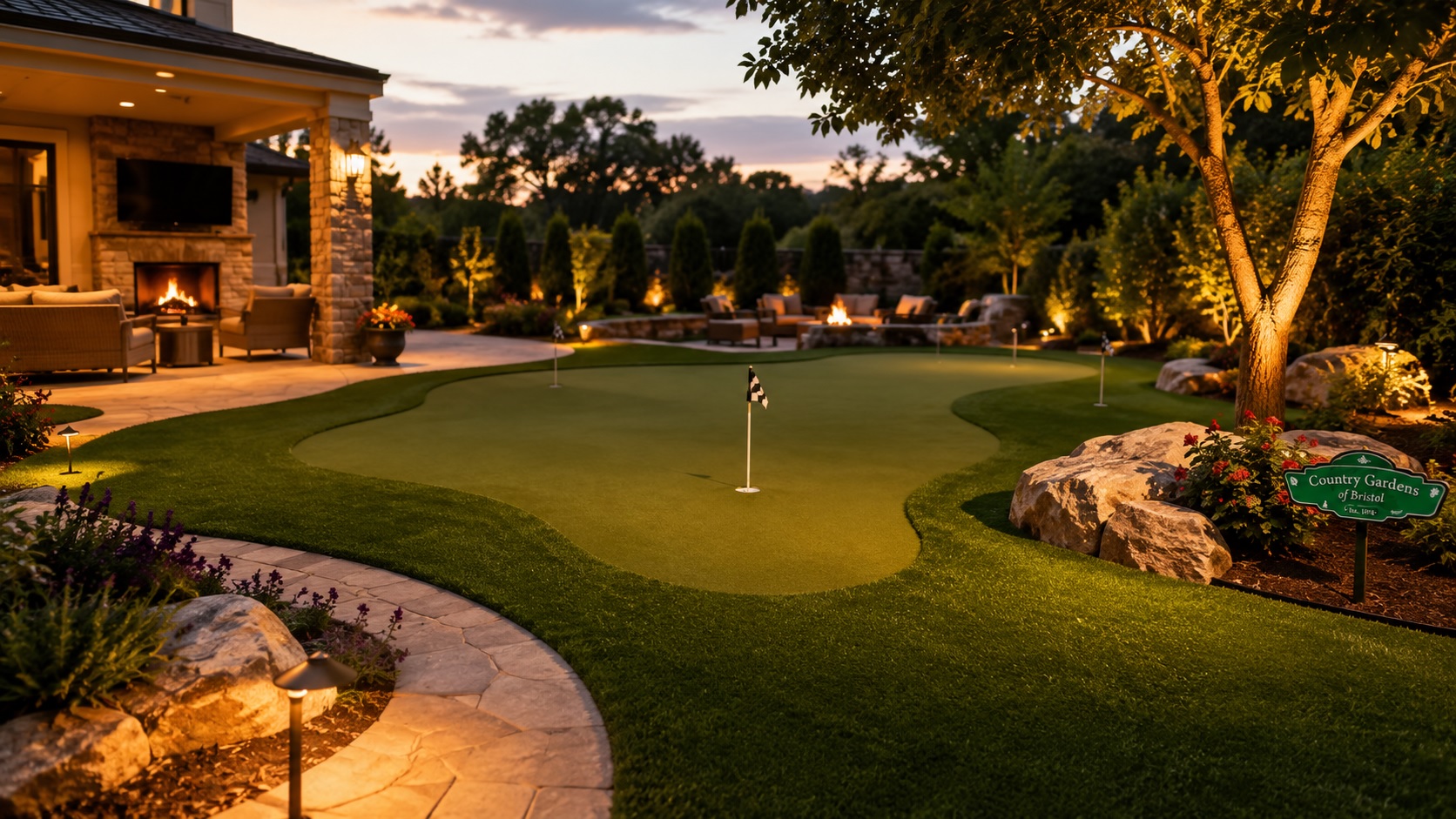
A backyard putting green is more than a golf feature. It is a luxury landscape upgrade that turns unused lawn space into a personal practice area, entertainment zone, and year-round focal point. For homeowners in Bristol, Farmington, Southington, Avon, Plainville, Burlington, and nearby Connecticut communities, synthetic turf makes that kind of outdoor living feature far more practical than natural putting green grass.
At Country Gardens of Bristol, our team designs outdoor spaces that look polished, drain correctly, and fit the way each property is used. A custom putting green works best when it is planned as part of the whole backyard, including patios, walkways, planting beds, lighting, drainage, irrigation, and surrounding hardscapes.
For homeowners searching artificial turf installation near me or comparing backyard putting green cost, the most important thing to know is this: the surface is only as good as the base beneath it.
Why Synthetic Turf Is Ideal for Backyard Putting Greens
Natural golf greens are beautiful, but they are not simple lawns. Real bentgrass putting surfaces require specialized maintenance, frequent mowing, aeration, grooming, topdressing, irrigation control, and careful turf management. Oregon State notes that bentgrass greens need thatch control through coring, vertical mowing, dethatching, and regular sand topdressing, while USGA guidance highlights the intensive mowing, grooming, aeration, and management needed to maintain creeping bentgrass putting greens.
That level of care makes sense for a golf course. It rarely makes sense for a residential backyard.
Synthetic grass putting green construction gives homeowners a cleaner, lower-maintenance alternative. A well-built synthetic green can provide a smooth putting surface without daily mowing, constant watering, chemical treatments, bare patches, mud, or seasonal turf decline.
Synthetic Putting Green vs. Real Bentgrass
| Feature | Real Bentgrass Green | Synthetic Turf Putting Green |
|---|---|---|
| Mowing | Requires very frequent precision mowing | No mowing required |
| Water use | Needs irrigation and careful moisture control | No watering needed for growth |
| Chemicals | May require fertilizers, weed control, and disease management | No lawn chemicals needed for growth |
| Weather impact | Can thin, brown, or disease under stress | Stays green through changing seasons |
| Maintenance level | High | Low |
| Best fit | Golf courses and specialized turf managers | Residential luxury landscaping |
A synthetic green gives homeowners the look and practice value of a golf feature without turning the backyard into a maintenance job.
Backyard Putting Green Cost: What Affects the Price?
Backyard putting green cost depends on size, shape, base preparation, cup layout, fringe turf, drainage, access, grading, and how much surrounding landscape work is included. Country Gardens’ artificial turf page lists many residential artificial turf installations in Bristol, CT around $14 to $26 per square foot, while noting that putting greens, complex drainage work, tight access, and premium turf products can cost more.
| Project Type | Typical Scope | Cost Factors |
|---|---|---|
| Small practice green | 1 to 2 cups, simple shape | Turf quality, excavation, base prep |
| Mid-size backyard green | Multiple cups, fringe, slight breaks | Grading, compaction, drainage, contouring |
| Luxury turf oasis | Putting green, fringe, patio, beds, walkways | Full design, hardscaping, lighting, planting, drainage |
| Complex site | Sloped, shaded, wet, or tight-access yard | Extra excavation, stone base, drainage planning |
The lowest bid usually cuts corners below the surface. The best value comes from proper excavation, drainage, compacted base layers, clean seams, correct turf selection, and a design that blends into the rest of the yard.
The Secret to True Ball Roll: Sub-Base Construction
A putting green is not built like regular lawn turf. Regular artificial grass needs a stable base, but a putting green needs a precision base. Small dips, loose stone, poor compaction, and uneven grading can affect ball roll.
Synthetic putting green construction sources agree that grading and compaction are critical for smooth ball roll, while drainage materials should support stability and permeability.
Our process focuses on the details that golfers feel immediately:
- Smooth surface transitions
- Firm, compacted sub-base
- Proper slope and drainage
- Controlled contours and breaks
- Stable cup placement
- Clean turf seams
- Secure edging
- Natural integration with patios, walkways, and planting beds
A putting green should challenge the golfer, not frustrate the golfer because of poor installation.
Our Backyard Putting Green Construction Process
1. Site Evaluation and Design Planning
Every project starts with the space. Some homeowners want a quiet practice green near the patio. Others want a full backyard entertainment feature with fringe turf, stone walkways, seating areas, landscape lighting, and planting beds.
Our landscape design process looks at grade, drainage, sun exposure, existing trees, backyard traffic, views from the house, and how the green will connect with the rest of the property.
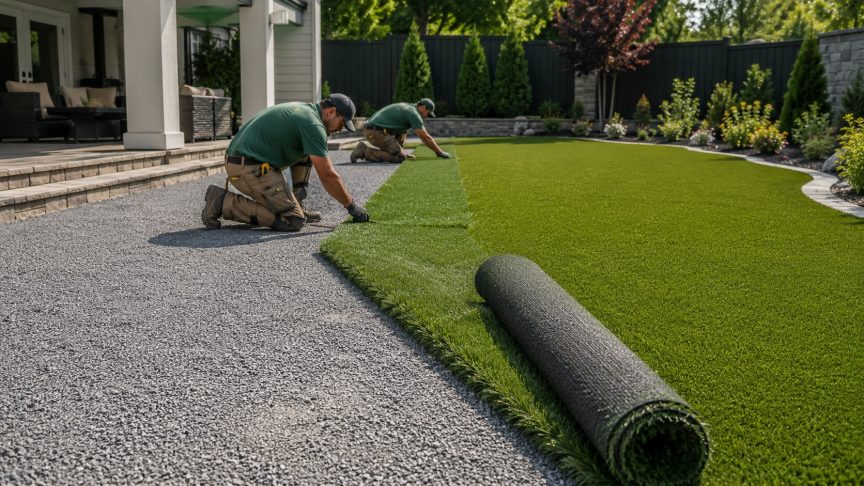
2. Excavation and Base Preparation
The existing grass, roots, organic material, and weak soil need to be removed before the base is built. This step is critical in Connecticut because freeze-thaw cycles, spring rain, and compacted soil can cause settling if the base is not prepared correctly.
3. Drainage Planning
A putting green should shed water properly and stay usable after rain. Drainage planning may include stone base layers, pitch adjustments, and smart placement near patios, walkways, slopes, or planting beds.
Country Gardens already builds artificial turf systems around drainage, soil conditions, grade, base depth, edging, seam layout, and long-term use.
4. Grading and Compaction
This is where the green begins to perform like a golf feature. The base is shaped, compacted, and refined so the ball rolls predictably. Breaks can be subtle or more challenging depending on the homeowner’s skill level and practice goals.
5. Turf Selection and Installation
Putting green turf is different from standard landscape turf. It has a shorter, denser pile designed for ball roll. Many projects also include a fringe turf around the green to create a more realistic golf-course look.
6. Cups, Fringe, and Finish Work
Cup placement should support real practice, not just appearance. We can design straight putts, breaking putts, uphill putts, and multiple practice angles. The surrounding fringe, edging, planting beds, and hardscape transitions complete the oasis.
Designing the Full Synthetic Turf Oasis
The best backyard putting greens do not look dropped into the yard. They feel like part of a complete outdoor living plan.
A luxury turf oasis may include:
- Custom putting green
- Fringe turf and chipping area
- Paver patio or seating zone
- Natural stone walkway
- Low-voltage landscape lighting
- Decorative boulders
- Planting beds with seasonal color
- Privacy screening
- Irrigation for surrounding plants
- Fire pit or lounge area
- Drainage improvements
- Stepping stones through turf
Where a Putting Green Fits Best in a Connecticut Backyard
A custom putting green can work in many places:
Unused Backyard Corners
A shaded or underused lawn corner can become a polished practice green with planting beds, stone edging, and accent lighting.
Beside a Patio
A putting green near the patio keeps the feature social. Guests can use it during cookouts, family gatherings, and outdoor evenings.
Near a Pool Area
Synthetic turf can soften poolside hardscapes and create a resort-style feel. Proper drainage and edging are especially important in these areas.
Along a Side Yard
A narrow side yard can become a clean practice lane with a single cup, fringe, and stepping-stone access.
Large Estate-Style Lawns
For larger properties in Farmington, Avon, Southington, and nearby areas, a putting green can become part of a broader low maintenance luxury landscaping plan with patios, trees, privacy plantings, and natural stone.
Low Maintenance Luxury Landscaping That Still Feels Natural
Synthetic turf should not make a backyard feel artificial. The right design uses contrast. Clean green turf pairs well with real planting beds, ornamental grasses, stone borders, pavers, trees, shrubs, and seasonal color.
That balance matters. A putting green looks more premium when it is framed by natural landscape elements and connected to outdoor living spaces.
For a high-end finish, consider:
- Curved green shapes instead of basic rectangles
- Fringe turf around the putting surface
- Natural stone or paver edging
- Layered plantings around the green
- Low-maintenance shrubs
- Decorative gravel in transition zones
- Lighting for evening use
- A small seating area nearby
The result is not just a putting surface. It is a backyard destination.
Common Mistakes to Avoid
A backyard green can fail when the design focuses only on the visible turf. Avoid these mistakes:
- Installing turf directly over soil
- Skipping excavation
- Using an uneven or loose base
- Ignoring drainage
- Choosing regular lawn turf for putting
- Making the green too flat or too steep
- Placing cups without practice variety
- Creating visible seams
- Forgetting fringe and landscape integration
- Treating the project as a small lawn replacement instead of a precision surface
A quality putting green requires landscape design, site engineering, and finish detail.
Is a Backyard Putting Green Worth It?
For golf enthusiasts, the value is easy to see. A backyard green creates daily practice time without driving to a course or practice facility. For homeowners focused on curb appeal and outdoor living, it turns unused space into a clean, impressive, low-maintenance feature.
A synthetic putting green can help with:
- Short game practice
- Backyard entertainment
- Luxury outdoor living
- Reduced lawn maintenance
- Cleaner usable space
- Year-round visual appeal
- Better use of awkward yard areas
For homeowners who want a premium landscape feature that performs and looks polished, a synthetic putting green is one of the most practical upgrades available.
The Backyard Green That Plays as Good as It Looks
A great putting green starts below the turf. The excavation, drainage, base compaction, grading, turf selection, and finish details all determine whether the ball rolls true and the space feels high-end.
At Country Gardens of Bristol, our team brings together artificial turf installation, landscape design, and full outdoor planning to create backyard putting greens that fit Connecticut homes beautifully.
FAQs
How much does a backyard putting green cost in Connecticut?
Backyard putting green cost depends on size, turf type, excavation, drainage, base construction, fringe turf, cup layout, and hardscape integration. Country Gardens of Bristol lists many residential artificial turf projects around $14 to $26 per square foot, while custom putting greens and complex sites can cost more.
Is synthetic grass good for backyard putting greens?
Yes. Synthetic grass putting green construction is ideal for homeowners who want a smooth, low-maintenance golf practice surface without daily mowing, watering, fertilizing, or chemical treatments.
What makes a backyard putting green roll correctly?
True ball roll depends on precise sub-base grading, compaction, drainage, turf selection, infill, cup placement, and seam work. The base beneath the turf is the most important part of the installation.
Can artificial turf be installed near patios and walkways?
Yes. Artificial turf can be installed around patios, walkways, pool areas, stepping stones, retaining walls, and outdoor living spaces when proper edging, cutting, and base preparation are used.
Who installs artificial turf putting greens near Bristol CT?
Country Gardens of Bristol installs artificial turf and custom backyard putting greens for homeowners in Bristol and nearby Connecticut communities, including Farmington, Southington, Avon, Plainville, and Burlington.