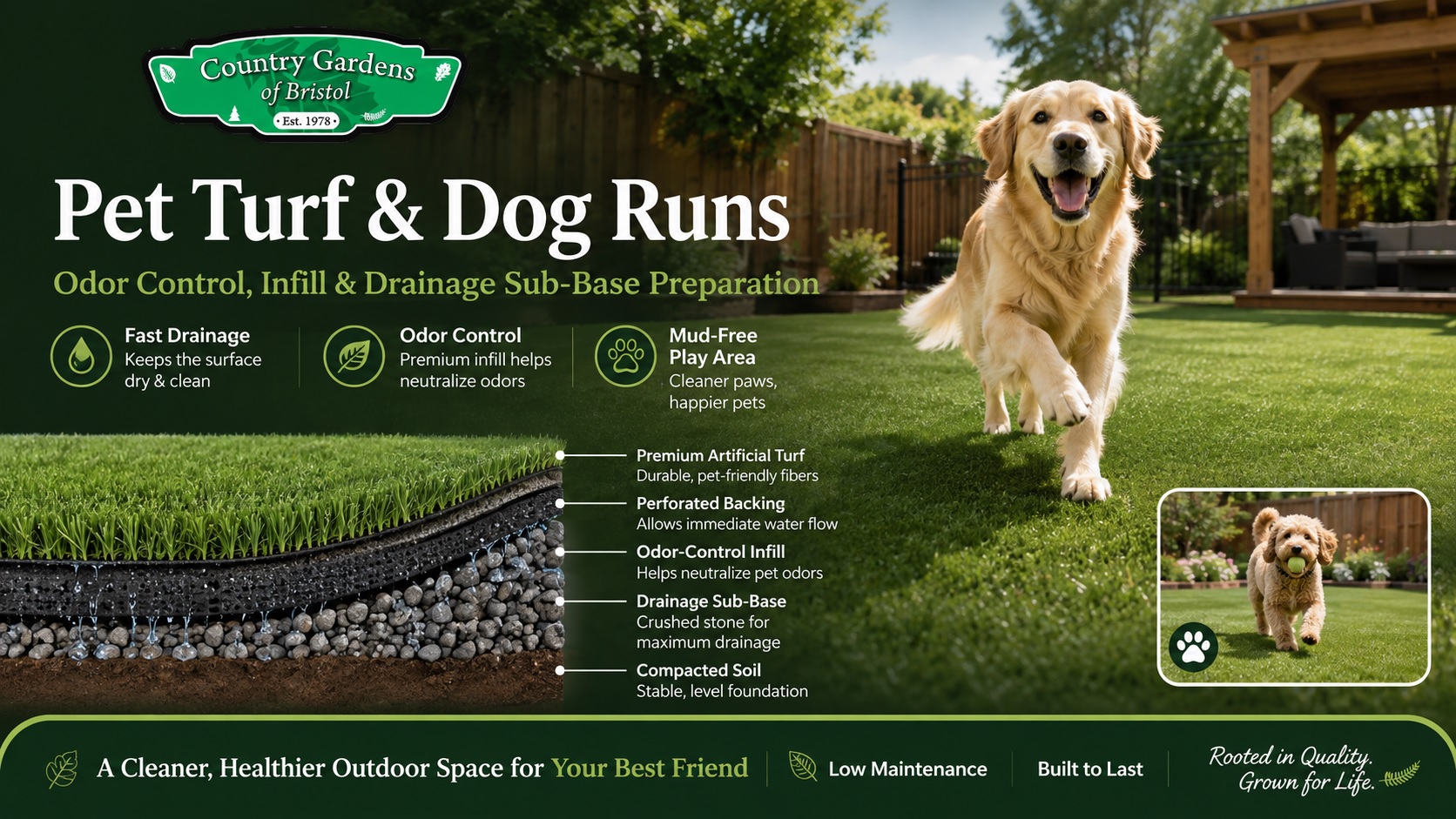
The best artificial turf for dogs is more than synthetic grass placed over dirt. At Country Gardens of Bristol, we build pet turf around fast drainage, a properly compacted stone sub-base, permeable turf backing, pet-appropriate infill, and simple rinse-and-clean maintenance. A properly prepared system lets urine and rainwater move through the turf instead of remaining near the surface, while zeolite-based infill can help manage ammonia-related odors. For Connecticut properties, the base also needs to remain stable through heavy rain, snowmelt, and freeze-thaw conditions. Country Gardens recommends free-draining stone, specialized drainage backing, odor-control infill, and regular cleaning for dedicated pet areas.
Why Dog Runs Destroy Natural Grass
Dogs tend to use the same paths, gates, fence lines, and bathroom areas every day. Natural turf rarely tolerates that concentrated traffic for long.
Compacted soil can stop draining properly, urine can damage grass, and repeated running can turn shaded or wet areas into mud. Once grass disappears, dogs can track soil through doors after nearly every rainy day.
Pet turf replaces that vulnerable top layer with a durable surface built over an engineered base. Our artificial turf installation service can be designed for dedicated dog runs, fenced relief areas, narrow side yards, or larger backyard lawn replacements. Country Gardens notes that modern pet systems can incorporate permeable backing, free-draining aggregate, odor-control infill, and easier rinse maintenance.
Pet Turf Drainage Base: What Goes Under Artificial Grass?
The pet turf drainage base may be the most important part of the entire installation.
Rolling synthetic turf directly over soil can lead to depressions, wrinkles, standing moisture, poor drainage, loose edges, and persistent odor. Country Gardens typically excavates residential turf areas approximately 3 to 5 inches where conditions allow, then grades and rebuilds the area with compacted aggregate. Wet sites or high-traffic areas may require deeper or more specialized preparation.
A pet-turf installation generally needs proper excavation, drainage grading, compactable crushed stone, secure perimeter restraints, permeable turf, seams positioned carefully, and pet-friendly infill.
The finished grade should move water away from foundations and prevent low spots. Where native Connecticut soil drains poorly, additional subsurface drainage may also be appropriate.
The Synthetic Turf Council publishes technical guidance specifically addressing stone base systems, drainage design, construction, and installation.
For technical reference, see the Synthetic Turf Council technical guidelines.
Why Perforated Backing Matters for Dogs
Pet urine should not sit on top of the turf or become trapped inside an impermeable layer.
Pet-specific turf commonly uses permeable or perforated backing so liquid can pass through the surface and reach the drainage base below. From there, proper stone selection and grading allow rinse water, rainfall, and pet urine to move away from the active turf layer.
This is especially important in concentrated dog runs.
A large backyard used by one small dog creates very different drainage demands than a narrow fenced run used by several large dogs every day. We size and prepare the system according to actual use rather than treating every artificial lawn the same.
Does Antimicrobial Pet Turf Prevent Odor?
Some pet turf products include fibers or treatments marketed as antimicrobial. These features can help limit microbial growth on the turf surface, but they should not replace proper drainage and cleaning.
Odor usually becomes troublesome when urine remains trapped within the turf, infill, or base.
That makes the complete system more important than any single product feature.
Country Gardens recommends pet systems with strong drainage, pet-safe materials, odor-control infill, and routine rinsing.
How Zeolite Infill Helps Control Dog Urine Odor
Standard turf infill provides ballast, supports fibers, and helps the surface remain stable.
For dog areas, we often look at zeolite-based infill because the porous mineral structure can help capture ammonium compounds associated with urine odor. Country Gardens specifically recommends zeolite in pet installations to help manage ammonia odors.
The key point is that infill does not make turf maintenance-free.
Heavy-use bathroom zones still need rinsing and occasional deeper cleaning.
How to Clean Artificial Turf After Dog Urine
For homeowners searching how to clean artificial turf dog urine, a consistent routine works better than waiting until strong odor develops.
Remove solid waste promptly. Rinse frequently used bathroom areas with clean water so urine moves through the backing and base. When odor persists, use a pet-safe turf or enzyme cleaner according to the turf manufacturer’s directions. Periodically brush high-traffic areas so blades stay upright and inspect the infill level, seams, edges, and drainage.
Avoid applying aggressive household chemicals without confirming compatibility with the turf system.
During hot weather, rinsing can also temporarily cool the surface. Our related guide on keeping artificial pet turf cool during summer covers shade, rinsing, drainage, and pet comfort in more detail.
How Much Does Artificial Turf for Dogs Cost?
Artificial turf for dogs cost depends heavily on what must happen below the surface.
A small, accessible yard with favorable drainage may require less site work than a clay-heavy dog run that needs extensive excavation and drainage correction. Major cost variables include turf area, excavation depth, disposal, aggregate quantity, drainage improvements, edging, turf grade, infill selection, seams, property access, and existing landscape removal.
That is why square-foot pricing alone can be misleading.
We prefer evaluating the site, pet traffic, drainage, and intended use before recommending the system.
Create a Cleaner, Mud-Free Dog Area
Pet turf can eliminate many of the muddy paths and worn-out lawn areas that come with active dogs, but good performance begins below the grass blades.
At Country Gardens of Bristol, we design artificial turf and dog-run installations around drainage, base stability, odor control, clean edges, pet traffic, and Connecticut weather conditions. The result is a yard that stays cleaner and remains easier to use throughout much more of the year.