
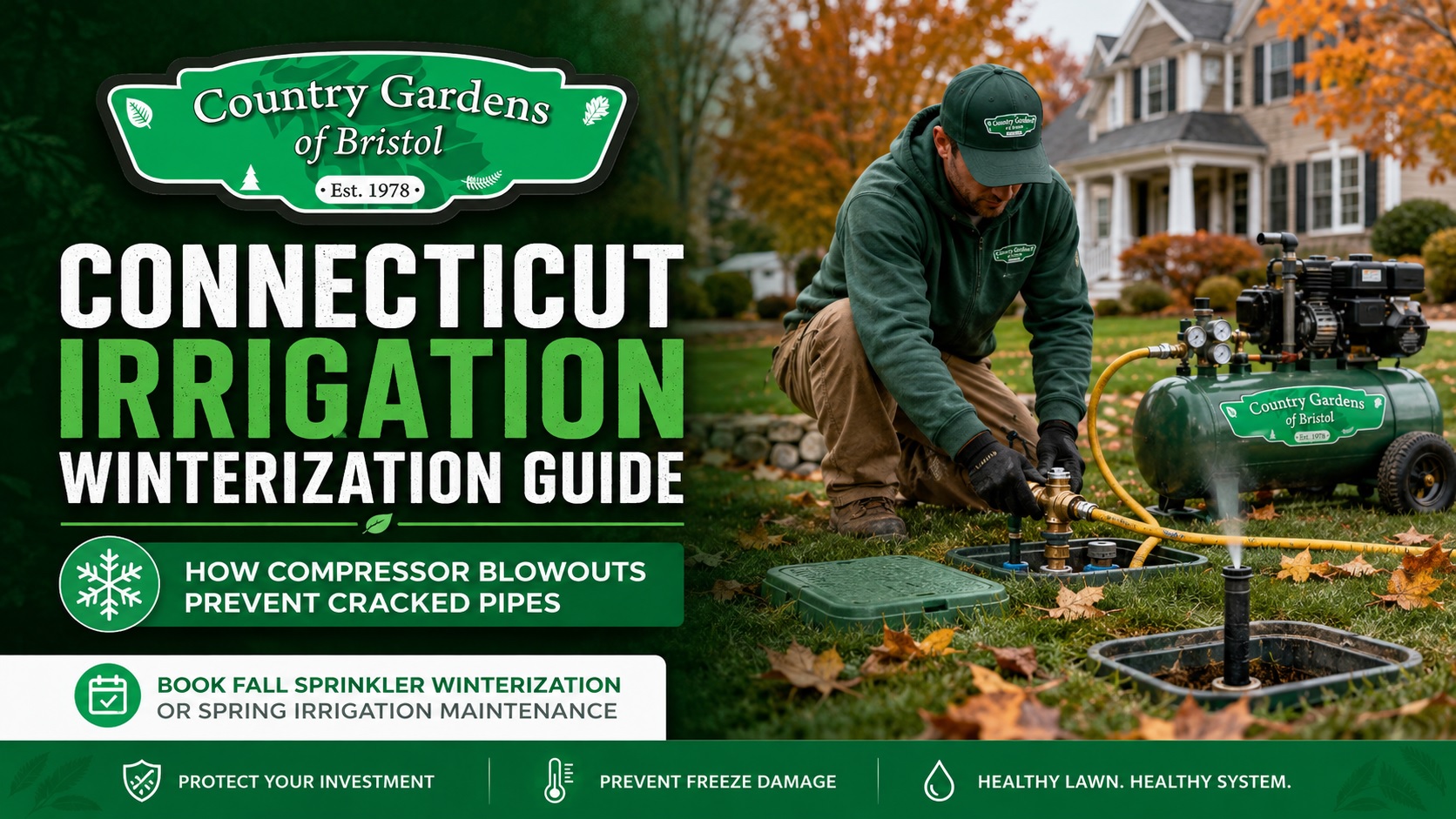
Connecticut sprinkler systems should be professionally winterized before sustained freezing weather arrives, commonly between early October and mid-November in the Bristol area. Turning off the water and opening drain valves may not remove water trapped inside low pipes, manifolds, control valves, sprinkler heads, and backflow components. A professional blowout uses regulated compressed air and adequate airflow to clear each zone without exceeding the pressure limits of the system. Country Gardens of Bristol provides seasonal blowouts, spring startups, head adjustments, and leak checks for residential and commercial irrigation systems.
Automated irrigation makes lawn and landscape care easier throughout the growing season. Once freezing temperatures arrive, however, any water left inside the system can become a source of costly damage.
At Country Gardens of Bristol, we winterize sprinkler systems as part of a full seasonal maintenance plan. Our goal is to protect underground piping, valves, heads, manifolds, controllers, and backflow equipment before the first deep freeze.
Why Manual Draining May Leave Water Behind
Some irrigation systems include manual or automatic drain valves. These devices can release a large amount of water, but they do not guarantee that every component becomes completely dry.
Water may remain inside:
- Low sections of buried pipe
- Valve boxes and manifolds
- Sprinkler bodies
- Drip irrigation lines
- Backflow preventers
- Piping that lacks a continuous downward slope
When trapped water freezes, expansion can crack fittings, split sprinkler bodies, damage valves, or create underground leaks that remain hidden until spring.
Rain Bird identifies manual draining, automatic draining, and compressed-air blowouts as separate winterization methods. Its guidance recommends a blowout when the system was designed for compressed-air winterization and warns that improper pressure or handling can damage equipment or injure the operator.
When Should Connecticut Sprinklers Be Winterized?
For most properties seeking an irrigation blowout near me in Bristol, CT, fall service should be completed after regular watering ends but before sustained freezing weather.
Our usual local scheduling window runs from early October through mid-November. Waiting until a hard freeze is already forecast can create scheduling problems and expose above-ground parts to damage.
Residential lawns, condominium grounds, commercial landscapes, and athletic properties may require different timing based on:
- Number of irrigation zones
- Property elevation
- Exposed piping
- Backflow-device location
- Newly seeded lawn areas
- Seasonal planting needs
- Available compressor access
How a Professional Compressor Blowout Works
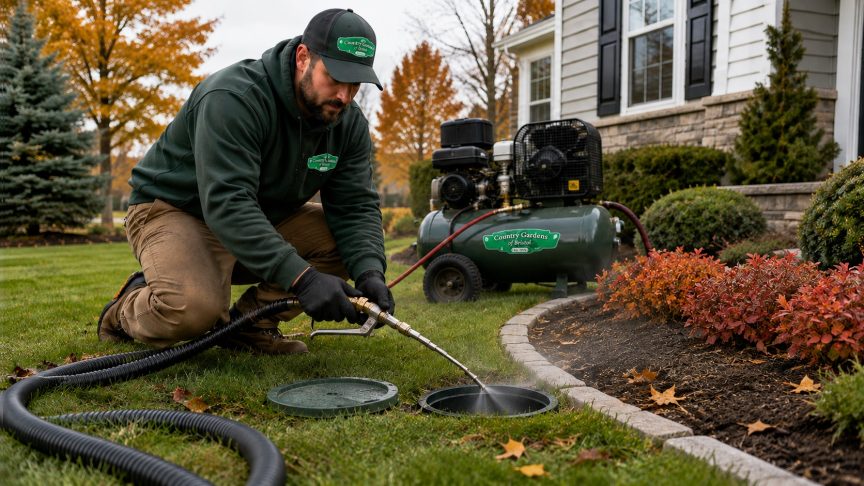
A professional blowout requires more than attaching a small shop compressor to a pipe. The process needs adequate airflow, controlled pressure, compatible fittings, and careful zone sequencing.
1. Shut Off the Irrigation Water
We isolate the irrigation supply from the household or commercial water system. The controller and valves are checked before compressed air enters the piping.
2. Protect the Backflow Assembly
The backflow preventer is isolated, drained, and positioned according to its design and manufacturer requirements. Compressed air should enter through an approved downstream connection rather than being forced carelessly through sensitive backflow components.
3. Connect a High-CFM Compressor
High airflow moves water through long pipe runs and multiple sprinkler heads. Pressure is regulated according to the system’s pipe material and lowest-rated component.
Rain Bird’s homeowner guide uses 50 psi as an example setting and explains that required air volume depends on pipe length and the number of heads. Exact settings must follow the installed equipment specifications.
4. Clear Each Zone
A zone is opened before airflow begins. Water is pushed through the sprinkler heads until the discharge becomes a light mist. Each zone may require more than one short cycle.
Rain Bird warns against running compressed air through a closed system and recommends limiting continuous blowout time because compressed air can generate heat that harms piping and components.
5. Secure the System for Winter
After every zone has been cleared, we relieve residual pressure, disconnect the compressor, protect exposed components, and place the controller in the proper winter setting.
Sprinkler System Winterization Cost in CT
The sprinkler system winterization cost in CT depends on the number of zones, system layout, property size, compressor access, backflow configuration, lake pumps, and needed repairs.
Published 2026 national pricing places many standard blowouts between $50 and $150 for up to 12 zones, with additional charges for extra zones or more complex systems. Connecticut quotes can differ based on travel, local labor, equipment, and system condition.
A seasonal package may provide better value when it combines fall winterization with spring startup and midseason adjustments.
Spring Irrigation System Startup Checklist
Winterization protects the system, but spring activation should still be gradual. Opening the main valve too quickly can create a sudden pressure surge.
Our spring irrigation system startup checklist includes:
- Inspecting the backflow preventer and exposed piping
- Slowly restoring the water supply
- Checking valve boxes, fittings, and pipes for leaks
- Running every zone independently
- Replacing broken or tilted sprinkler heads
- Adjusting spray patterns away from pavement and buildings
- Testing drip zones, rain sensors, and smart controllers
- Updating schedules for current landscape conditions
EPA WaterSense recommends inspecting connections, correcting broken heads, redirecting overspray, and reviewing controller settings to reduce wasted water.
Certain Connecticut backflow devices must be tested by properly trained and certified personnel. Property owners should confirm the requirements for the installed assembly with the local water provider or health authority.
Our spring cleanup checklist also covers sprinkler heads, leaks, uneven coverage, controller settings, rain sensors, and wet or dry lawn areas.
Book Fall or Spring Irrigation Service
Country Gardens of Bristol provides irrigation installation and seasonal maintenance for homes, businesses, and managed properties across Bristol and Central Connecticut.
Contact our team to book a fall compressor blowout, spring startup, sprinkler repair, head adjustment, or seasonal irrigation maintenance package.