
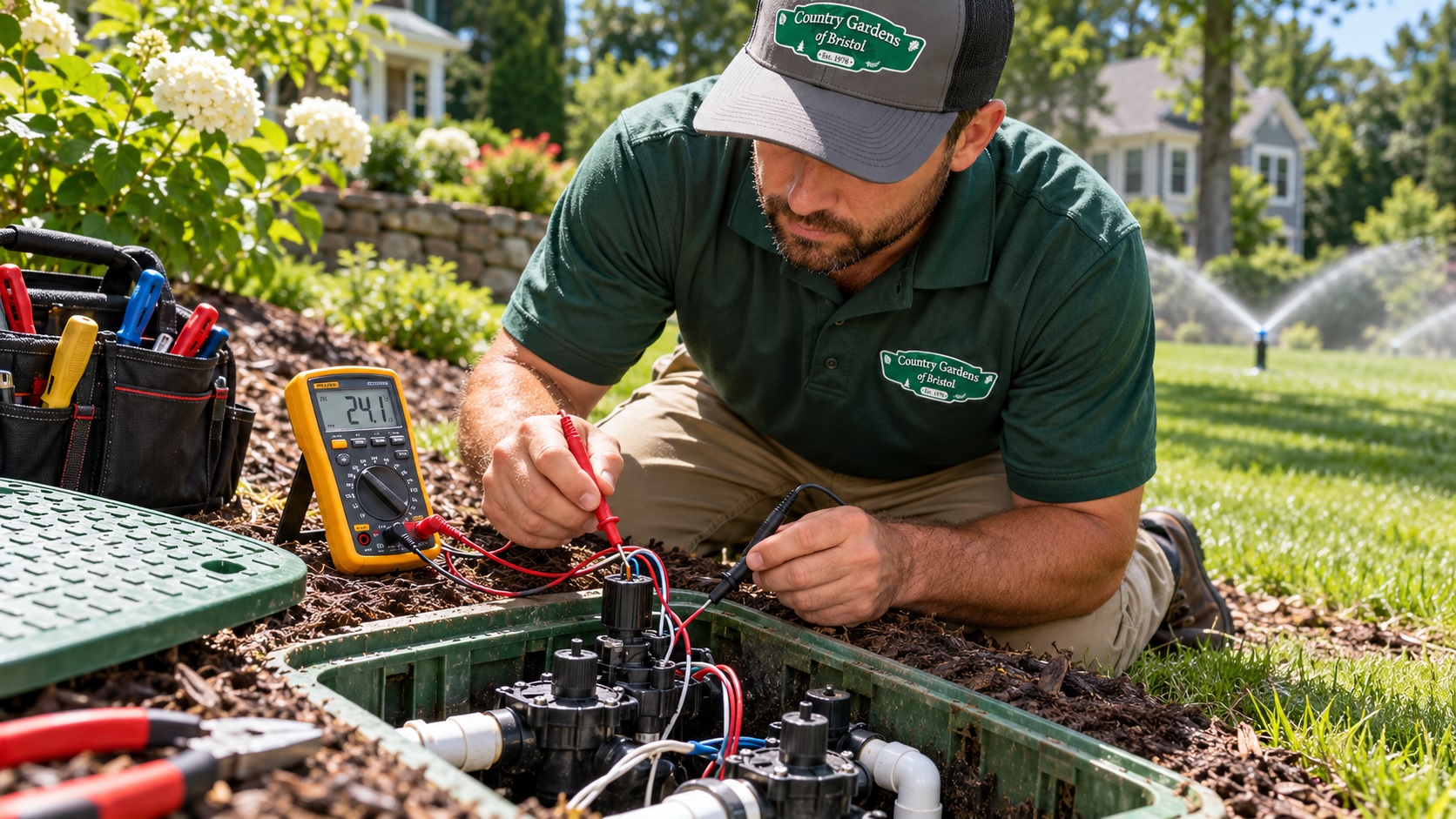
When one sprinkler zone stops working but the others operate normally, the problem often involves a faulty solenoid, damaged wiring, malfunctioning irrigation valve, or controller setting. Low water pressure, clogged components, and underground pipe leaks can also prevent proper operation. Start by running the affected zone manually from the controller, checking its settings, and comparing its behavior with a working zone. Professional testing can identify whether the issue is electrical or mechanical.
Why Is Only One Sprinkler Zone Not Working?
A properly functioning irrigation system distributes water across different sections of your property using independently controlled zones.
When one zone fails, the surrounding lawn or garden may receive insufficient water while the remaining areas continue watering normally.
At Country Gardens of Bristol, we help Connecticut homeowners troubleshoot irrigation problems, repair damaged components, and maintain efficient watering systems.
Understanding why an irrigation zone won’t turn on helps determine whether the problem requires a simple adjustment or professional repair.
7 Common Reasons a Sprinkler Zone Stops Working
1. Faulty Sprinkler Valve Solenoid
A failed solenoid is a common cause of an irrigation zone not turning on.
The solenoid is an electrical component that activates the irrigation valve when the controller sends a signal.
Signs of a possible solenoid failure include:
- One sprinkler zone remains completely inactive.
- Other irrigation zones operate normally.
- The affected valve operates manually but not automatically.
- The controller appears to activate the station without water flowing.
We recommend testing the solenoid before replacing the entire valve.
2. Sprinkler Controller Programming Problems
Sometimes the issue is not underground.
A sprinkler controller may have an incorrect schedule, disabled station, or programming conflict.
Check whether:
- The affected station has an assigned watering duration.
- The controller is set to automatic operation.
- Seasonal adjustments have disabled watering.
- A rain sensor or other programmed restriction is preventing operation.
Run the affected station manually to determine whether the problem involves its schedule or equipment.
3. Damaged Irrigation Wiring
Underground irrigation wiring can deteriorate or become damaged during landscaping, digging, or yard renovations.
Moisture entering poorly protected connections may also cause electrical problems.
A damaged station wire can prevent one valve from receiving the signal needed to open.
According to Hunter Industries’ valve troubleshooting guidance, irrigation solenoids commonly operate using approximately 24 volts AC.
We recommend having a qualified technician test voltage at the controller and affected valve before attempting electrical repairs.
4. Stuck or Clogged Sprinkler Valve
A sprinkler valve problem can occur when sediment, dirt, or other debris prevents internal components from operating correctly.
Some valves contain a flexible diaphragm that controls water flow.
If the diaphragm becomes damaged or internal passages become blocked, the valve may fail to open.
Common symptoms include complete zone failure, intermittent operation, or unusual water flow.
A professional can inspect, clean, or replace the affected components.
5. Low Water Pressure
An irrigation zone may activate but produce weak or incomplete sprinkler coverage.
Potential causes include:
- Partially closed isolation valves
- Underground pipe leaks
- Excessive water demand
- Blocked pipes or filters
- Water supply pressure fluctuations
When several sprinklers in one zone produce weak streams, we recommend checking for leaks and restrictions before replacing individual heads.
6. Broken Underground Irrigation Pipe
A damaged pipe can prevent adequate water from reaching the sprinkler heads.
Warning signs include unusually wet lawn areas, puddles, soil erosion, or reduced water pressure.
Connecticut freeze-thaw cycles can contribute to pipe damage, especially when irrigation systems are not properly winterized.
Our irrigation services in Bristol, CT include system inspections, leak detection, sprinkler repairs, and seasonal maintenance.
7. Clogged or Damaged Sprinkler Heads
Sometimes the entire zone appears faulty because several sprinkler heads are clogged, buried, or damaged.
Dirt, grass roots, and mineral deposits can restrict water flow.
We recommend checking whether water reaches the affected heads before assuming the controller or valve has failed.
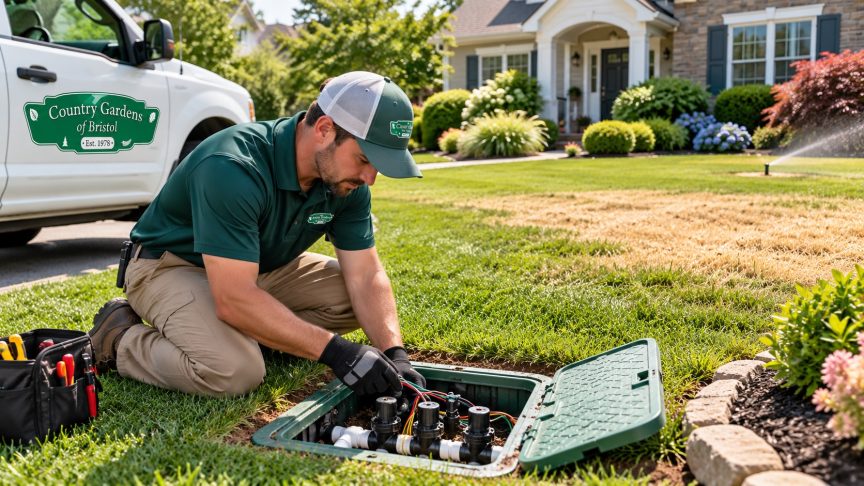
How to Troubleshoot a Sprinkler Zone That Won’t Turn On
A few basic observations can help narrow down the problem.
| Symptom | Possible Cause | Recommended Action |
|---|---|---|
| Entire zone remains off | Solenoid, wiring, or valve | Test controller and valve |
| Zone runs manually at controller but not on schedule | Programming issue | Review watering settings |
| Valve opens manually but not electrically | Wiring, solenoid, or controller output | Electrical diagnosis |
| Zone activates with low pressure | Leak or restriction | Inspect piping and water supply |
| Only certain heads fail | Clogged or broken heads | Inspect and clean components |
| Zone won’t shut off | Stuck valve or controller issue | Shut off irrigation water and inspect |
Safe Initial Troubleshooting Steps
- Run a working zone to confirm that the irrigation supply is operating.
- Activate the problem zone manually using the controller.
- Check for controller error messages or disabled settings.
- Look for wet spots, broken heads, or unusual water flow.
- Locate the valve box without disturbing buried wiring.
- Arrange professional testing if the problem persists.
Avoid opening pressurized valve components or modifying electrical wiring without appropriate training.
Manual valve operation should follow the specific manufacturer’s instructions.
When Should You Call an Irrigation Professional?
Some irrigation problems require specialized diagnostic equipment and experience.
We recommend professional assistance when a zone repeatedly fails, underground wiring is damaged, a valve needs replacement, or water leaks beneath the lawn.
Our team can inspect the affected components, determine the cause, and recommend repairs without unnecessary system replacement.
Regular inspections also help prevent unexpected problems during Connecticut’s warmer months.
For additional water-saving guidance, explore our related article on smart sprinkler controllers in Connecticut.
Frequently Asked Questions
Why won’t one sprinkler zone turn on while others work?
Common causes include a failed solenoid, damaged station wire, blocked valve, or incorrect controller settings. Testing the affected zone helps identify the problem.
How do you know if a sprinkler valve is bad?
A valve may be faulty when it fails to open despite receiving the correct electrical signal and having adequate water pressure. Professional testing can confirm the cause.
Can a sprinkler controller cause one zone to stop working?
Yes. A disabled station, programming error, damaged terminal, or failed controller output can prevent an individual zone from operating.
Should a broken sprinkler valve be repaired or replaced?
The decision depends on the condition of the valve. Minor solenoid or diaphragm problems may be repairable, while significant damage may require replacement.
Restore Your Irrigation System With Country Gardens of Bristol
A sprinkler zone not working can leave sections of your lawn dry, stressed, and vulnerable during Connecticut’s growing season.
At Country Gardens of Bristol, we provide professional irrigation installation, maintenance, and troubleshooting services throughout Bristol and surrounding Connecticut communities.
From sprinkler valve problems to controller malfunctions and underground leaks, we help homeowners restore reliable watering performance.