
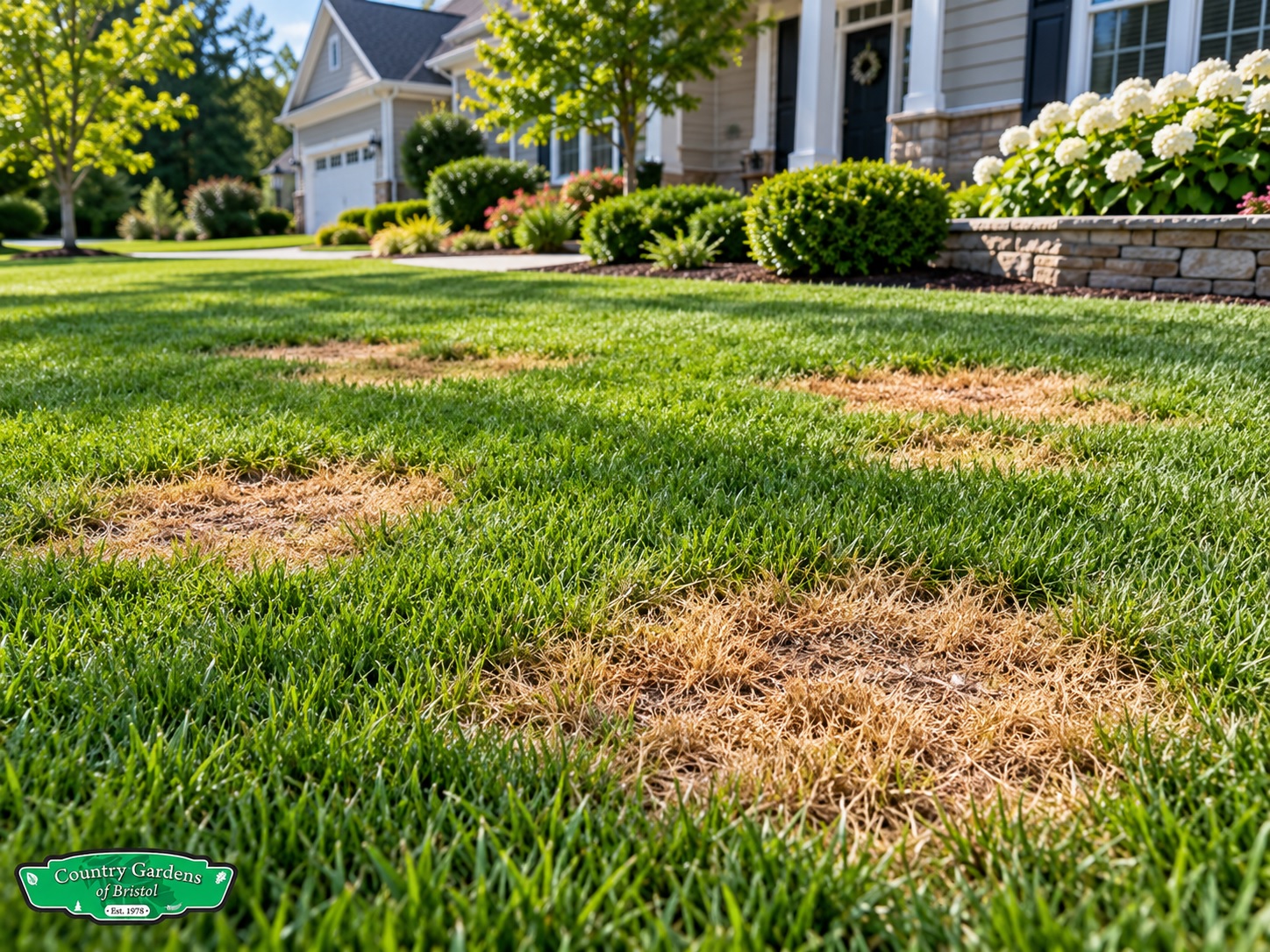
Brown spots in a lawn can result from drought stress, uneven watering, fungal diseases, white grubs, pet urine, fertilizer burn, or compacted soil. In Connecticut, hot and humid summers can encourage brown patch disease, while dry conditions can cause cool-season grass to become temporarily dormant. To fix brown lawn spots, identify the underlying cause before watering, fertilizing, or reseeding. Severely damaged areas may require aeration, soil improvement, overseeding, or professional lawn restoration.
Why Is My Lawn Turning Brown in Spots?
A healthy green lawn can suddenly develop brown circles, irregular patches, or entire sections of thinning grass.
At Country Gardens of Bristol, we help homeowners throughout Central Connecticut identify lawn problems and restore healthy turf.
The challenge is that several conditions produce similar symptoms.
Brown patches do not always mean the grass is dead. Sometimes the lawn is temporarily stressed and can recover once growing conditions improve.
Understanding the cause helps prevent unnecessary treatments and recurring damage.
7 Common Causes of Brown Spots in Your Lawn
1. Drought Stress and Uneven Watering
Insufficient moisture is one of the most common reasons lawns develop brown areas.
During Connecticut summers, grass growing in direct sunlight may dry out faster than shaded sections.
Common symptoms include:
- Grass turning gray-green before becoming brown
- Dry soil beneath affected areas
- Footprints remaining visible after walking
- Brown patches near pavement or exposed slopes
How to Fix It: We recommend checking soil moisture and sprinkler coverage before increasing irrigation.
Established cool-season lawns generally benefit from deeper, less frequent watering when irrigation is needed. However, summer-dormant grass should not automatically receive excessive watering.
2. Brown Patch Lawn Fungus
Brown patch is a fungal disease affecting cool-season grasses, including tall fescue and perennial ryegrass.
It becomes more active during hot, humid conditions, especially when grass remains wet overnight.
Warning signs include circular or irregular brown patches, tan lesions with darker edges on individual blades, and occasional threadlike fungal growth during humid mornings.
How to Fix It: We recommend avoiding excessive nitrogen fertilizer, improving airflow, and watering early in the morning when necessary.
Fungicides are not always required. Correct diagnosis and proper cultural care should come first.
3. White Grubs Damaging Grass Roots
White grubs are beetle larvae that feed on grass roots beneath the soil.
Affected turf may turn brown despite adequate moisture because damaged roots cannot support healthy growth.
One important warning sign is grass that lifts easily from the soil, almost like loose carpet.
According to the University of Connecticut Extension’s grub management guidance, grub populations should be evaluated before selecting a control treatment.
How to Fix It: We recommend inspecting the root zone and confirming grub activity. Appropriate treatment depends on grub populations, species, and seasonal timing.
4. Dog Urine and Pet Damage
Pet urine can create small, concentrated dead patches in otherwise healthy grass.
These spots sometimes have a brown center surrounded by a darker green ring.
Repeated exposure to concentrated urine can damage grass tissue.
How to Fix It: Promptly watering areas after urination may reduce damage. We also recommend directing pets toward a designated area and repairing severely affected turf after addressing the cause.
5. Fertilizer Burn or Chemical Damage
Applying too much fertilizer can damage grass rather than improve it.
Excess soluble salts may injure roots and cause yellow or brown patches.
Spilled lawn chemicals and incorrectly applied herbicides can produce similar symptoms.
How to Fix It: Stop unnecessary applications, identify the product involved, and follow its label guidance. When appropriate, watering may help reduce fertilizer salt concentrations.
Avoid applying additional fertilizer until the cause has been identified.
6. Compacted Soil and Poor Drainage
Connecticut properties often contain dense soil that limits root development and water movement.
When soil becomes compacted, grass roots struggle to access oxygen, moisture, and nutrients.
Poor drainage can also leave roots saturated for extended periods.
How to Fix It: We recommend core aeration, soil testing, and appropriate grading improvements.
Our related article, Why Is My Bristol Lawn Patchy?, explains how soil compaction, acidity, and drainage affect local lawns.
7. Mowing Damage and Excessive Shade
Cutting grass too short weakens turf and increases vulnerability to heat and drought.
Dull mower blades can also tear grass leaves, creating a brown appearance across recently mowed areas.
Heavy shade presents another challenge because grass receives less sunlight for growth.
How to Fix It: We recommend maintaining an appropriate mowing height, sharpening mower blades, and selecting shade-tolerant grass varieties where suitable.
How to Identify the Cause of Brown Lawn Spots
Before treating affected grass, compare its appearance with these common symptoms.
| Lawn Symptom | Possible Cause |
|---|---|
| Dry, irregular brown areas | Drought or uneven irrigation |
| Circular patches during humid weather | Fungal disease |
| Grass lifting easily from soil | Grub-related root damage |
| Small spots with dark green edges | Pet urine |
| Brown streaks after lawn treatment | Fertilizer or chemical damage |
| Wet, thin areas with compacted soil | Poor drainage |
| Browning after mowing | Scalping or dull mower blades |
These clues help narrow down the problem but do not replace proper inspection.
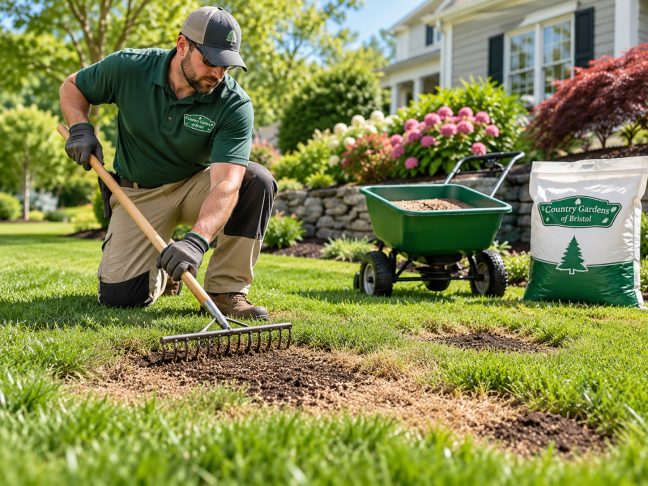
How to Repair Dead Patches of Grass
Once the underlying cause has been corrected, damaged areas may need restoration.
We recommend the following approach:
- Remove dead grass and accumulated debris.
- Loosen compacted soil where necessary.
- Correct drainage and soil deficiencies.
- Add suitable topsoil or compost when needed.
- Reseed with grass varieties appropriate for Connecticut.
- Maintain consistent moisture during seed establishment.
- Limit foot traffic until new grass becomes established.
Late summer through early fall is generally the preferred period for establishing cool-season grass in Connecticut.
For larger bare sections, our professional hydroseeding services in Bristol, CT provide an option for restoring damaged lawns after appropriate soil preparation.
Frequently Asked Questions
Will brown grass turn green again?
Yes, if the grass is dormant or temporarily stressed and its roots and crowns remain alive. Completely dead grass must be replaced or reseeded.
How do you tell if brown lawn spots are fungus?
Fungal diseases may produce irregular patches, discolored leaf lesions, or threadlike growth during humid conditions. Professional diagnosis helps distinguish disease from drought or chemical damage.
Should you water brown patches every day?
Not necessarily. Excessive watering can worsen fungal diseases and drainage problems. Watering should match soil moisture, weather, and the actual cause of browning.
What is the best time to repair dead grass patches in Connecticut?
Late August through September is generally ideal for reseeding cool-season lawns because temperatures become more favorable for establishment.
Restore Your Lawn With Country Gardens of Bristol
Brown spots in a lawn can indicate anything from temporary drought stress to underlying soil problems or pest damage.
At Country Gardens of Bristol, we provide lawn restoration, hydroseeding, irrigation, and landscaping services throughout Bristol, Farmington, Southington, Plainville, Wolcott, and surrounding Connecticut communities.
Our team evaluates the condition of your lawn before recommending a repair strategy.