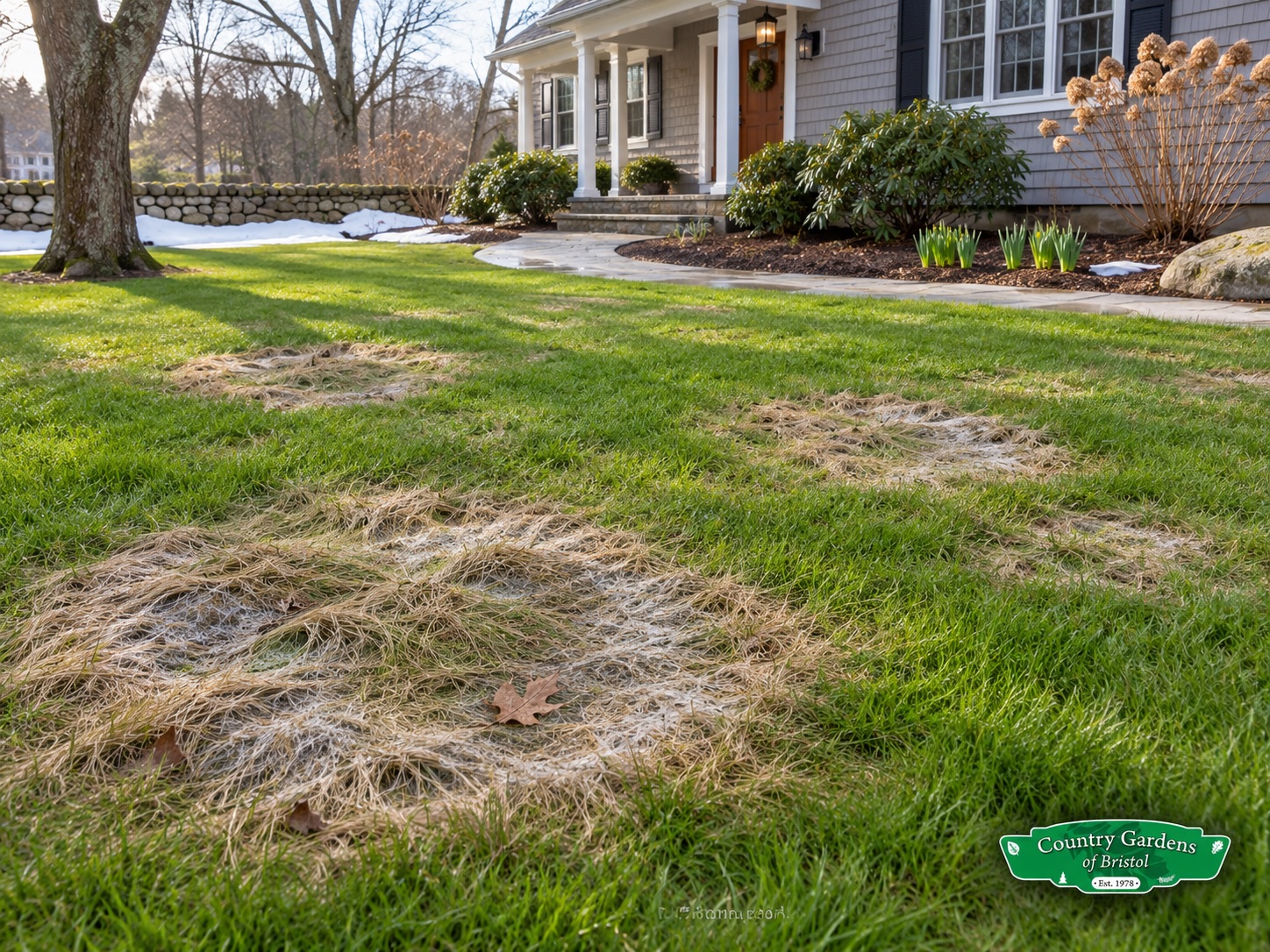
Snow mold on grass is a fungal disease that appears after winter as circular patches of matted, white, gray, pink, or straw-colored turf. Gray snow mold usually damages grass blades and often disappears as the lawn begins growing in spring, while pink snow mold can damage grass crowns and cause more serious injury. Most affected Connecticut lawns recover with gentle raking, improved airflow, and proper spring maintenance. Severely damaged patches may require reseeding or professional lawn restoration.
What Is Snow Mold on Grass?
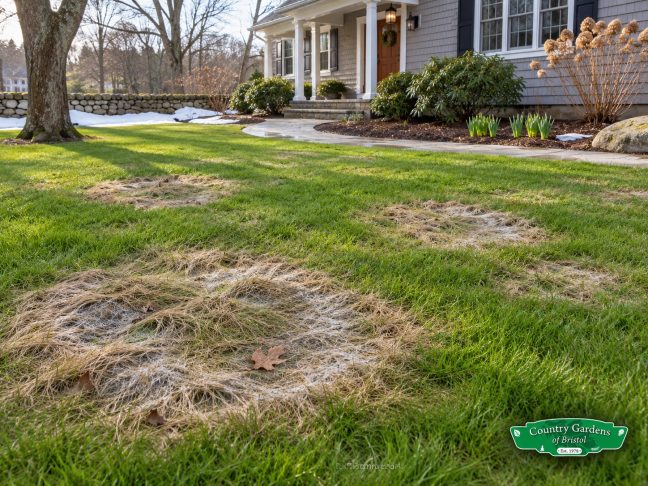
When Connecticut snow begins melting, homeowners sometimes discover circular patches of flattened, discolored grass across their lawns.
These patches may look dead, but the underlying grass can still be alive.
At Country Gardens of Bristol, we help homeowners throughout Central Connecticut evaluate winter lawn damage and prepare their landscapes for healthy spring growth.
Snow mold develops when certain fungi thrive in cool, damp conditions beneath snow or layers of matted grass.
The disease is particularly common where snow remains piled along driveways, sidewalks, and shaded lawn sections.
The good news is that most snow mold damage is temporary, particularly when the grass crowns and roots remain healthy.
Pink Snow Mold vs. Gray Snow Mold: What’s the Difference?
Two main snow mold diseases affect Connecticut lawns.
1. Gray Snow Mold
Gray snow mold, caused by Typhula fungi, typically develops beneath prolonged snow cover.
Affected grass may appear:
- Gray, white, or straw-colored
- Flattened or matted together
- Covered with fine, web-like fungal growth
- Arranged in irregular or circular patches
Gray snow mold primarily damages grass leaves rather than roots and crowns.
As temperatures warm and grass begins actively growing, affected areas usually recover.
2. Pink Snow Mold
Pink snow mold, caused by Microdochium nivale, can develop during extended periods of cool, wet weather, even without snow cover.
Common symptoms include:
- Pale tan or brown circular patches
- Pinkish or salmon-colored fungal growth
- Matted grass blades
- Larger damaged areas where patches merge
Unlike gray snow mold, pink snow mold can damage grass crowns and roots, occasionally leading to permanent turf loss.
Pink vs. Gray Snow Mold Comparison
| Feature | Pink Snow Mold | Gray Snow Mold |
|---|---|---|
| Appearance | Tan patches with possible pink coloring | White, gray, or straw-colored patches |
| Snow required | No | Usually prolonged snow cover |
| Damage | Leaves and sometimes crowns | Primarily leaves |
| Recovery | May require reseeding | Usually recovers naturally |
| Active conditions | Cold, wet weather | Cold, wet conditions beneath snow |
Color alone cannot always confirm the disease. Both types may appear together.
What Causes Snow Mold in Connecticut Lawns?
Several environmental conditions encourage snow mold development.
1. Prolonged Snow Coverage
Thick snow creates a moist environment where certain fungi can grow.
Grass beneath snowbanks may remain wet long after surrounding areas begin drying.
2. Excessive Late-Fall Fertilization
Heavy nitrogen applications shortly before winter can encourage tender grass growth that is more vulnerable to disease.
We recommend following soil test results and appropriate seasonal fertilization schedules.
3. Matted Grass and Excessive Thatch
Long grass, accumulated leaves, and thick thatch can trap moisture against the lawn surface.
This creates favorable conditions for fungal activity.
4. Poor Lawn Drainage
Low spots and compacted soil can retain excess moisture during snowmelt.
When wet conditions persist, grass recovery may take longer.
How to Treat Snow Mold on Grass in Spring
Most homeowners can begin with simple lawn maintenance rather than chemical treatment.
Step 1: Wait Until the Lawn Dries
Avoid walking or operating equipment on saturated soil.
Early spring traffic can compact the ground and damage recovering grass.
Step 2: Gently Rake Matted Grass
Once conditions improve, lightly rake affected areas to separate flattened grass blades.
This increases airflow and helps the surface dry.
Avoid aggressive dethatching while the lawn is soft or vulnerable.
Step 3: Remove Leaves and Debris
Clear accumulated leaves, branches, and other materials that trap moisture.
Good airflow and sunlight help create more favorable growing conditions.
Step 4: Allow Natural Recovery
According to the University of Connecticut Extension’s Spring Lawn Care Tips, gray snow mold generally does not kill grass, and affected areas often recover after gentle raking.
We recommend allowing grass to resume active growth before assuming the lawn requires replacement.
Step 5: Fertilize Only When Appropriate
Avoid applying excessive fertilizer immediately after snowmelt.
If a soil test indicates a nutrient deficiency, a properly timed spring application may support recovery.
Step 6: Reseed Severely Damaged Areas
When grass crowns have died, affected sections may require reseeding.
For larger damaged areas, our professional hydroseeding services in Bristol, CT can help establish new grass after proper soil preparation.
Should You Apply Fungicide to Snow Mold?
For most residential lawns, spring fungicide applications are unnecessary.
Gray snow mold usually stops developing as snow disappears and the lawn dries.
Fungicides applied after visible gray snow mold damage appears generally do not improve recovery.
Pink snow mold may remain active during prolonged cool, wet conditions, but routine spring fungicide use is rarely necessary for established home lawns.
We recommend professional diagnosis before considering any fungicide application.
How to Prevent Snow Mold Next Winter
Prevention begins before Connecticut’s first significant snowfall.
We recommend:
- Continue mowing until grass stops actively growing.
- Remove thick layers of fallen leaves.
- Avoid excessive late-fall nitrogen applications.
- Improve drainage in persistently wet areas.
- Reduce repeated foot traffic across snow-covered lawns.
- Avoid piling unnecessary snow onto vulnerable lawn sections.
For a broader seasonal maintenance guide, read our related article, The Ultimate Spring Cleanup Checklist for Central Connecticut.
Frequently Asked Questions
Will snow mold on grass go away by itself?
Usually. Gray snow mold commonly disappears as temperatures rise and grass begins growing. Severe pink snow mold may require lawn repair.
How long does snow mold take to disappear?
Visible damage often improves over several weeks of active spring growth. Recovery depends on grass health, weather, and disease severity.
Does snow mold kill grass permanently?
Gray snow mold rarely kills established turf. Pink snow mold can damage crowns and occasionally cause permanent grass loss.
Should you rake snow mold in spring?
Yes, once the lawn is sufficiently dry. Gentle raking lifts matted grass and encourages airflow.
Can you reseed grass damaged by snow mold?
Yes. If damaged patches do not recover, reseeding can restore the lawn. Cool-season grass generally germinates more reliably when soil temperatures exceed approximately 50°F.
Restore Your Lawn With Country Gardens of Bristol
Snow mold on grass may look alarming after winter, but many Connecticut lawns recover naturally with proper spring maintenance.
At Country Gardens of Bristol, we provide landscaping, lawn restoration, hydroseeding, irrigation, and seasonal maintenance services throughout Bristol, Farmington, Plainville, Southington, Wolcott, and surrounding Connecticut communities.
Whether your lawn has minor gray snow mold or extensive winter damage, we can help determine the appropriate restoration approach.