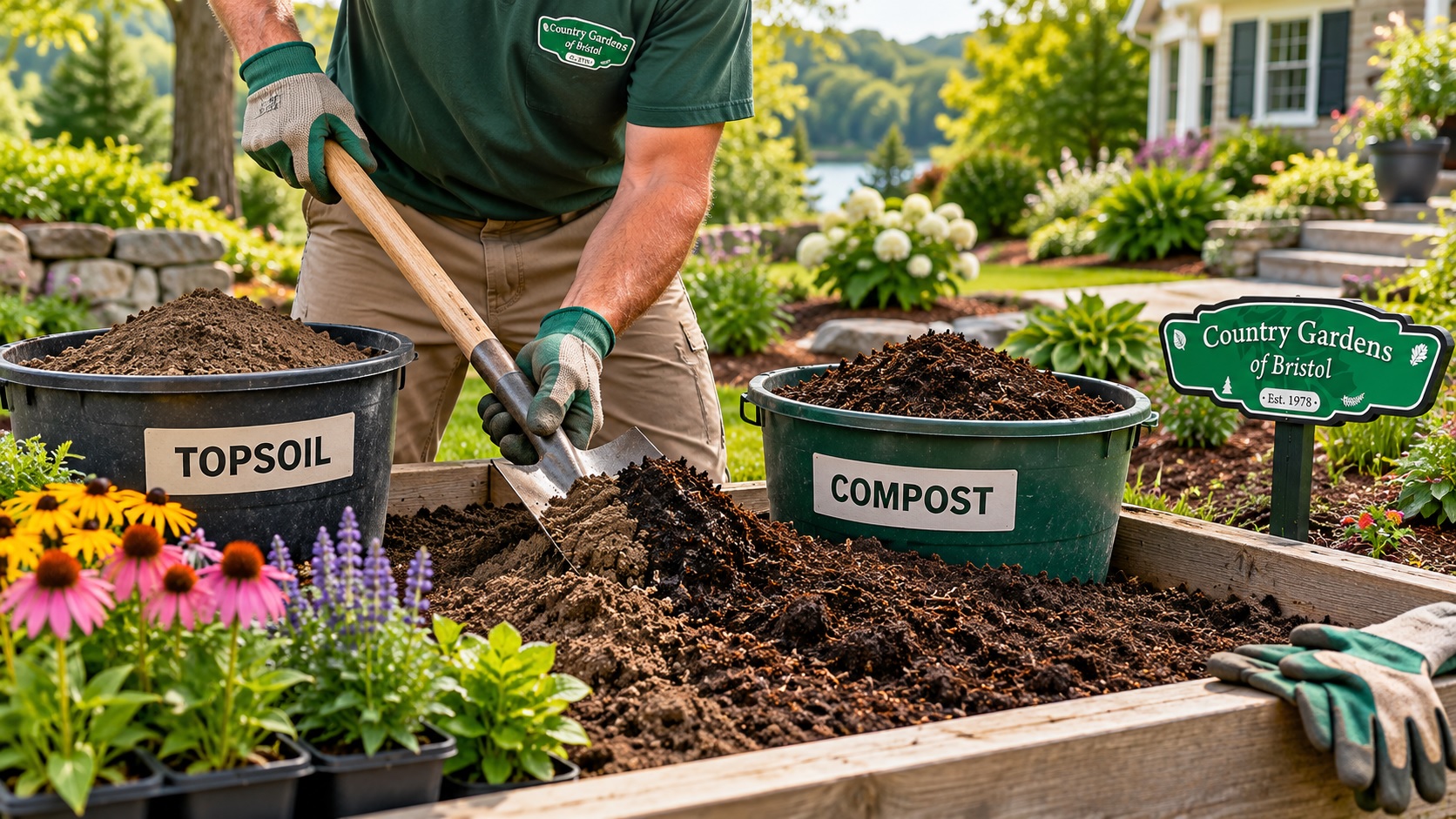
The main difference between topsoil and compost is their purpose. Topsoil provides mineral-based growing soil for lawns, gardens, and landscaping, while compost adds decomposed organic matter that improves soil structure, moisture retention, and nutrient availability. For new lawns or raised beds, a quality topsoil and compost blend often works best. For existing gardens with poor soil, compost may be the better amendment.
Topsoil vs. Compost: Understanding the Difference
Healthy plants begin with healthy soil. However, choosing between topsoil vs compost can be confusing, especially when both materials look similar.
At Country Gardens of Bristol, we help Connecticut homeowners select suitable landscaping materials for lawns, flower beds, vegetable gardens, and new planting projects.
Although both materials support plant growth, they serve different purposes.
What Is Topsoil?
Topsoil is the upper mineral-rich layer of natural soil, typically containing sand, silt, clay, organic matter, and microorganisms.
Quality screened topsoil can provide a growing medium for roots while helping establish the correct lawn or garden grade.
Best uses for topsoil include:
- Establishing new lawns
- Filling shallow landscape depressions
- Preparing planting beds
- Replacing poor-quality or rocky soil
- Building up garden areas
Not all purchased topsoil has the same composition. Screened soil may be easier to spread, but screening alone does not guarantee proper fertility, drainage, or organic matter content.
What Is Compost?
Compost is decomposed organic material created from ingredients such as leaves, grass clippings, and other biodegradable matter.
Unlike topsoil, compost primarily functions as a soil amendment.
It helps improve soil structure, supports beneficial microorganisms, and increases moisture and nutrient retention.
According to UConn Extension’s composting guidance, finished compost can improve sandy soils’ water-holding capacity and make heavier soils easier to work with.
Best uses for compost include:
- Improving compacted garden soil
- Adding organic matter to planting beds
- Supporting vegetable gardens
- Conditioning soil before planting
- Refreshing established flower beds
Pure compost generally should not replace soil entirely because excessive applications can create nutrient and salt imbalances.
Topsoil vs. Compost: Side-by-Side Comparison
| Feature | Topsoil | Compost |
|---|---|---|
| Main purpose | Growing medium and soil depth | Organic soil amendment |
| Composition | Mineral soil with varying organic matter | Decomposed organic materials |
| Nutrient content | Depends on source and quality | Adds nutrients gradually |
| Water retention | Varies by soil texture | Often improves retention |
| Lawn installation | Suitable growing layer | Improves prepared soil |
| Garden beds | Provides soil foundation | Improves existing soil |
| Best approach | Use quality tested soil | Incorporate moderate amounts |
For many landscape projects, combining both materials produces better results than relying on either alone.
Compost vs. Garden Soil: Are They the Same?
Another common question involves compost vs garden soil.
Garden soil usually refers to soil intended for growing plants. Commercial garden soil products may contain topsoil, compost, and other amendments.
Compost, meanwhile, is an ingredient used to improve that growing medium.
For example, a vegetable garden may benefit from mineral soil blended with mature compost. The soil provides structure and root support, while the compost improves organic matter content.
We recommend checking product ingredients instead of assuming every bag labeled “garden soil” contains the same materials.
Which Should You Use for Different Landscaping Projects?
New Lawns: Choose Quality Topsoil
When installing a new lawn, establishing sufficient soil depth and proper grading comes first.
Quality topsoil creates a suitable surface for grass establishment.
If the soil lacks organic matter, incorporating mature compost into the prepared root zone can improve growing conditions.
For Connecticut properties with compacted ground, simply spreading topsoil over hard clay may leave underlying drainage problems unresolved.
Vegetable Gardens: Use Soil and Compost Together
Vegetables need soil that supports root growth, retains moisture, and drains adequately.
A quality soil and compost blend provides a practical foundation for raised beds and vegetable gardens.
For existing garden beds, incorporating approximately 1 to 2 inches of mature compost into the upper 6 to 8 inches of soil is a commonly recommended starting approach, subject to soil conditions and testing.
Flower Beds and Shrubs: Improve Existing Soil
Established flower beds do not always require additional topsoil.
If the existing soil has enough depth but poor structure, compost may be the better choice.
For new landscape installations, we evaluate drainage, planting depth, and soil quality before recommending amendments.
Our landscape design and installation services include soil conditioning and site preparation suited to Connecticut properties.
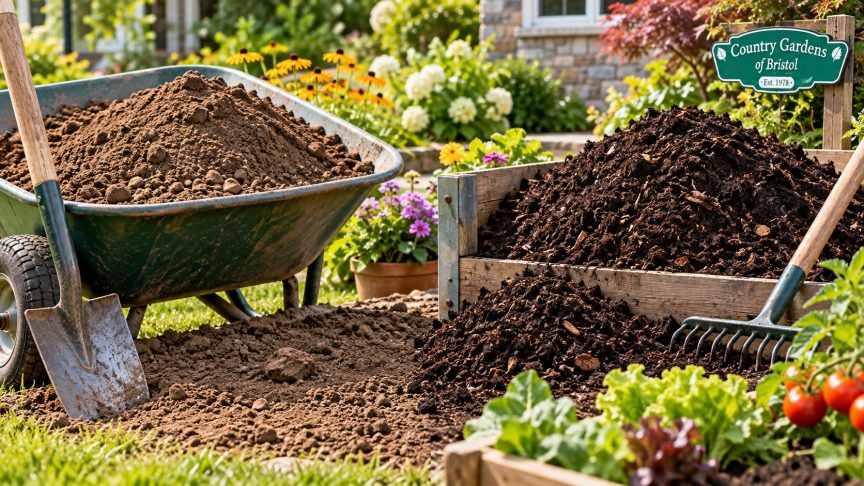
Topsoil vs. Soil Amendment: Why Soil Testing Matters
The difference between topsoil vs soil amendment becomes particularly important when dealing with difficult soil conditions.
Many Connecticut landscapes contain acidic, compacted, or clay-rich soils.
Adding compost can improve structure, but it cannot automatically correct every problem.
Before purchasing materials, we recommend checking:
- Soil pH and nutrient levels
- Existing organic matter
- Drainage and compaction
- Available root-zone depth
- Intended plants or lawn type
Excessive compost can also contribute unnecessary phosphorus or salts.
For a deeper explanation, explore our related article, Connecticut Soil Testing Guide: How to Fix Acidic Clay Soil Before Planting.
Frequently Asked Questions
Is compost better than topsoil for grass?
Compost can improve soil quality, but topsoil is generally more appropriate when establishing soil depth or replacing poor growing material. A balanced combination may benefit new lawns.
Can compost replace garden soil?
No. Compost works best as an amendment mixed with mineral soil rather than as a complete replacement for garden soil.
Should compost be mixed with topsoil?
Yes, when the soil needs additional organic matter. Proper mixing can improve moisture retention, structure, and growing conditions.
Can too much compost damage plants?
Yes. Excess compost may increase soluble salts or create nutrient imbalances. Moderate application and soil testing help reduce these risks.
Build Healthier Lawns and Gardens With Country Gardens of Bristol
Choosing between topsoil and compost depends on what your landscape needs.
Topsoil provides a growing foundation, while compost improves soil quality. When used appropriately, both materials help support long-term plant health.
At Country Gardens of Bristol, we help homeowners throughout Bristol and surrounding Connecticut communities plan healthier lawns, gardens, and outdoor spaces.
Planning a new garden or lawn renovation? Contact Country Gardens of Bristol at (860) 584-8997 for landscaping guidance and help selecting the right soil materials for your project.