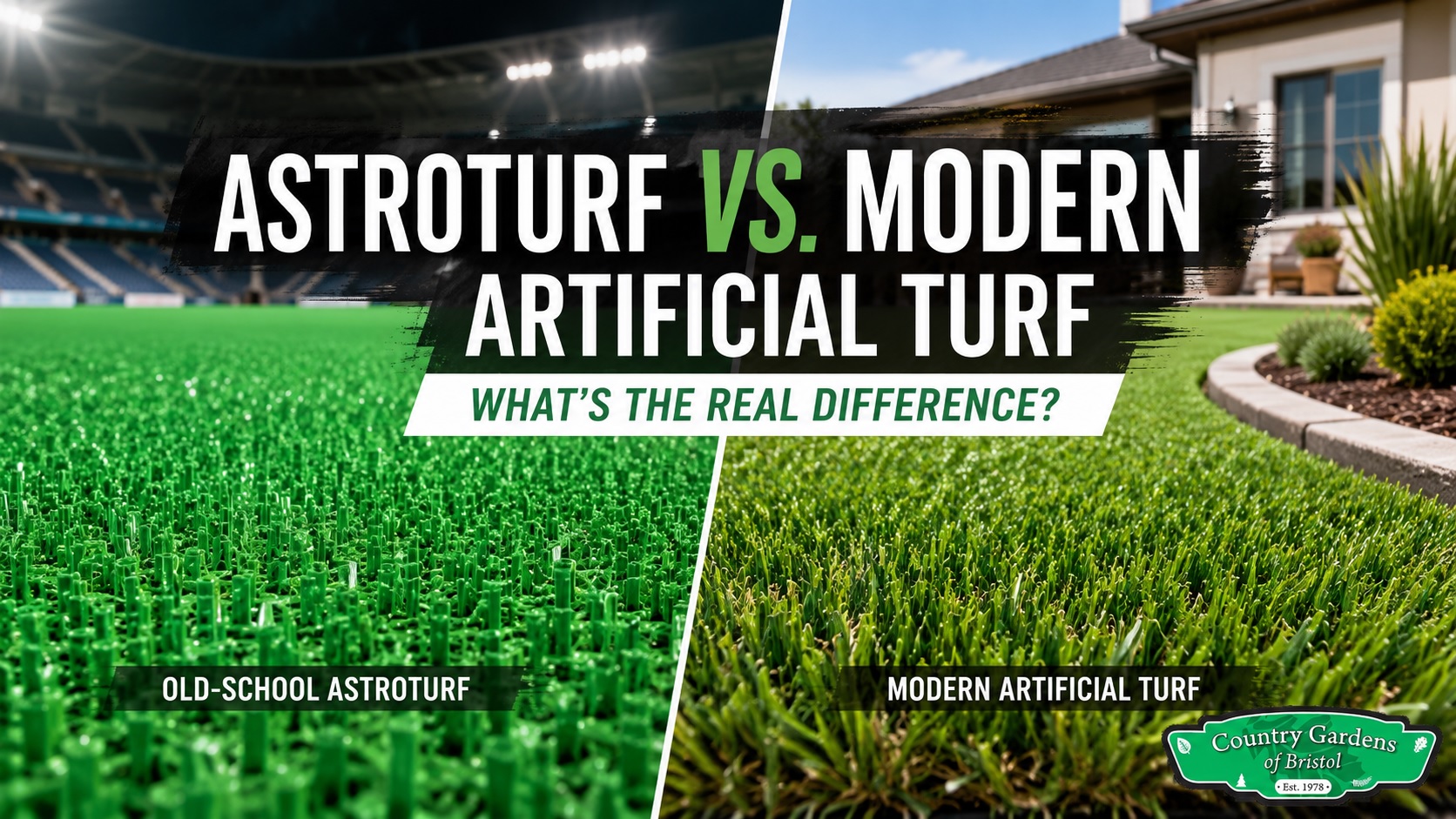
Many Bristol homeowners still hear “artificial turf” and picture the hard, shiny, bright-green carpet once used in old sports stadiums. That older surface gave fake grass a reputation for looking plastic, feeling stiff, and performing nothing like a real lawn.
Modern artificial turf is a very different product. At Country Gardens of Bristol, our team installs realistic artificial turf systems built with engineered fibers, drainage layers, compacted stone bases, infill, and multi-tonal color blends that fit today’s Connecticut landscapes.
What Is AstroTurf?
AstroTurf started as a branded synthetic sports surface used in stadium environments where natural grass could not survive. Over time, many people began using “AstroTurf” as a general term for fake grass.
Older turf systems were usually short, dense, and uniform in color. They were built for durability in sports settings, not for backyard curb appeal, pet comfort, or natural-looking residential landscape design.
That is why the phrase astroturf vs artificial grass matters. AstroTurf often refers to the older idea of synthetic carpet, while modern synthetic grass refers to today’s engineered lawn systems designed for homes, pets, play areas, patios, pool borders, and putting greens.
Why Old Fake Grass Looked So Artificial
Old-school turf had three major problems.
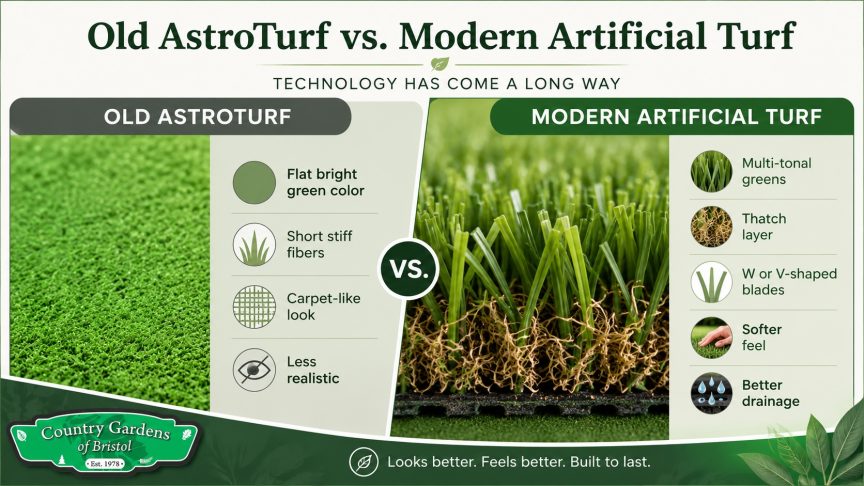
First, the color was often a single bright green. Real lawns are not one flat color. Natural grass has olive, lime, deep green, brown, and tan tones mixed together.
Second, the fibers were usually short and stiff. That made the surface look more like outdoor carpet than a lawn.
Third, many early products lacked a realistic thatch layer. Natural grass has lower curled fibers and organic-looking material near the base. Without that visual depth, older turf looked thin and flat.
Modern synthetic turf solves these problems with multi-tonal blades, softer fibers, shaped yarn, and brown or tan thatch zones that mimic the lower layer of a real lawn.
Modern Synthetic Grass Uses Better Fiber Engineering
The biggest difference between old AstroTurf and modern synthetic grass is the blade design.
Today’s turf fibers may use shapes such as W-shaped, V-shaped, C-shaped, S-shaped, diamond, or ribbed profiles. These shapes help each blade stand upright, reflect light more naturally, and recover after foot traffic.
A flat plastic strip tends to glare in the sun. A shaped fiber bends light in different directions, which gives realistic synthetic turf a softer and more natural appearance.
This matters in Connecticut yards because turf is viewed from many angles. A lawn beside a patio, walkway, pool deck, or outdoor kitchen needs to look natural up close, not just from the street.
For full-yard planning, homeowners can pair turf with our landscape design services so the grass area connects cleanly with planting beds, steps, stonework, and outdoor living areas.
Multi-Tonal Color Makes a Big Difference
A real Bristol lawn changes color through the seasons. Spring growth may look brighter. Summer grass can deepen. Shaded areas may look cooler and darker. Dry edges may show tan undertones.
Modern artificial turf uses several blade colors in one product. A quality residential turf may include deep green, field green, olive, tan, and brown fibers. This blend helps the surface avoid the “neon carpet” look many buyers remember from older fake grass products.
For homeowners comparing astroturf vs artificial grass, color blending is one of the easiest differences to see. Older turf often looks flat. Modern synthetic grass has depth.
The Thatch Zone Creates Natural Texture
The thatch zone is the curled fiber layer near the bottom of the turf. It can include tan, brown, or lighter green strands that sit under the taller grass blades.
This layer helps modern artificial turf look fuller and more natural. It also supports the upright blades, adds visual density, and reduces the see-through look that can happen with cheaper turf.
For family yards, pet areas, and side yards, the thatch zone is especially important because people see the surface at close range. The better the thatch blend, the less the turf looks like a roll of plastic.
Modern Turf Is a Full System, Not Just a Roll of Grass
One of the biggest misconceptions about artificial turf is that it gets rolled over dirt. That shortcut can lead to wrinkles, poor drainage, weeds, odors, and uneven settling.
A proper installation includes excavation, grading, a compacted aggregate base, edge restraints, seam work, infill, and final brushing. We explained on our turf installation page how a stable base helps turf perform through Connecticut rain, snowmelt, and freeze-thaw movement.
For properties with patios, walkways, retaining walls, or paver borders, turf can also be combined with our hardscaping services for a clean, finished transition.
What About Pets and Mud?
Modern artificial turf is much better suited for dogs than older products. Pet turf systems can include permeable backing, free-draining stone, odor-control infill, and routine rinse maintenance.
This makes turf useful near back doors, fenced runs, shaded paths, and high-traffic areas where natural grass turns into mud. For dog owners searching for a cleaner yard surface, modern synthetic grass is not the same as old AstroTurf.
Is Modern Artificial Turf Realistic Enough for Front Yards?
Yes, when the right product is selected and installed correctly. The most realistic system usually has:
- Multi-tonal green blades
- Brown or tan thatch
- Soft polyethylene fibers
- Shaped blade profiles
- Proper pile height
- Natural grain direction
- Clean edging
- A compacted stone base
The goal is not to make every property look identical. The goal is to match the turf to the home, sunlight, traffic level, pet use, and surrounding landscape.
Homeowners can also view completed outdoor work through our projects page for ideas on how turf can fit into a larger yard renovation.
AstroTurf vs Artificial Grass: Quick Comparison
| Feature | Old-School AstroTurf | Modern Artificial Turf |
|---|---|---|
| Main use | Stadiums and sports fields | Lawns, pets, play areas, patios, putting greens |
| Color | Often one bright green tone | Multi-tonal greens with tan or brown thatch |
| Texture | Short, stiff, carpet-like | Softer, fuller, more grass-like |
| Blade design | Basic flat fibers | W, V, C, S, diamond, or ribbed profiles |
| Base system | Sports-focused surface layers | Residential drainage and compacted stone base |
| Appearance | Artificial and uniform | More realistic and landscape-friendly |
| Pet use | Limited comfort and odor control | Pet-specific systems available |
Modern Turf Has Moved Far Beyond Stadium Carpet
The real difference between AstroTurf and modern artificial turf is engineering. Today’s turf is not just fake grass with a better color. It uses shaped fibers, realistic thatch, multi-tonal blends, drainage-focused backing, infill support, and professional base preparation.
For Bristol, CT homeowners, that means a cleaner and more natural-looking lawn option for shaded areas, pet zones, pool borders, courtyards, putting greens, and low-maintenance backyard upgrades.
Country Gardens of Bristol installs artificial turf with the same attention given to grading, drainage, hardscape transitions, and full landscape planning. To compare options for your property, contact our team for a local consultation.
FAQs
Is modern artificial turf better than old AstroTurf?
Yes. Modern artificial turf looks more realistic, feels softer, drains better when installed correctly, and can be selected for pets, play areas, putting greens, or residential lawns.
What makes realistic artificial turf look natural?
Realistic artificial turf usually combines multi-tonal greens, brown or tan thatch, shaped blades, proper pile height, and clean installation details.
Who is an artificial turf installer near Bristol, CT?
Country Gardens of Bristol installs artificial turf in Bristol, CT for residential lawns, pet areas, side yards, pool borders, patios, play spaces, and landscape upgrades.