
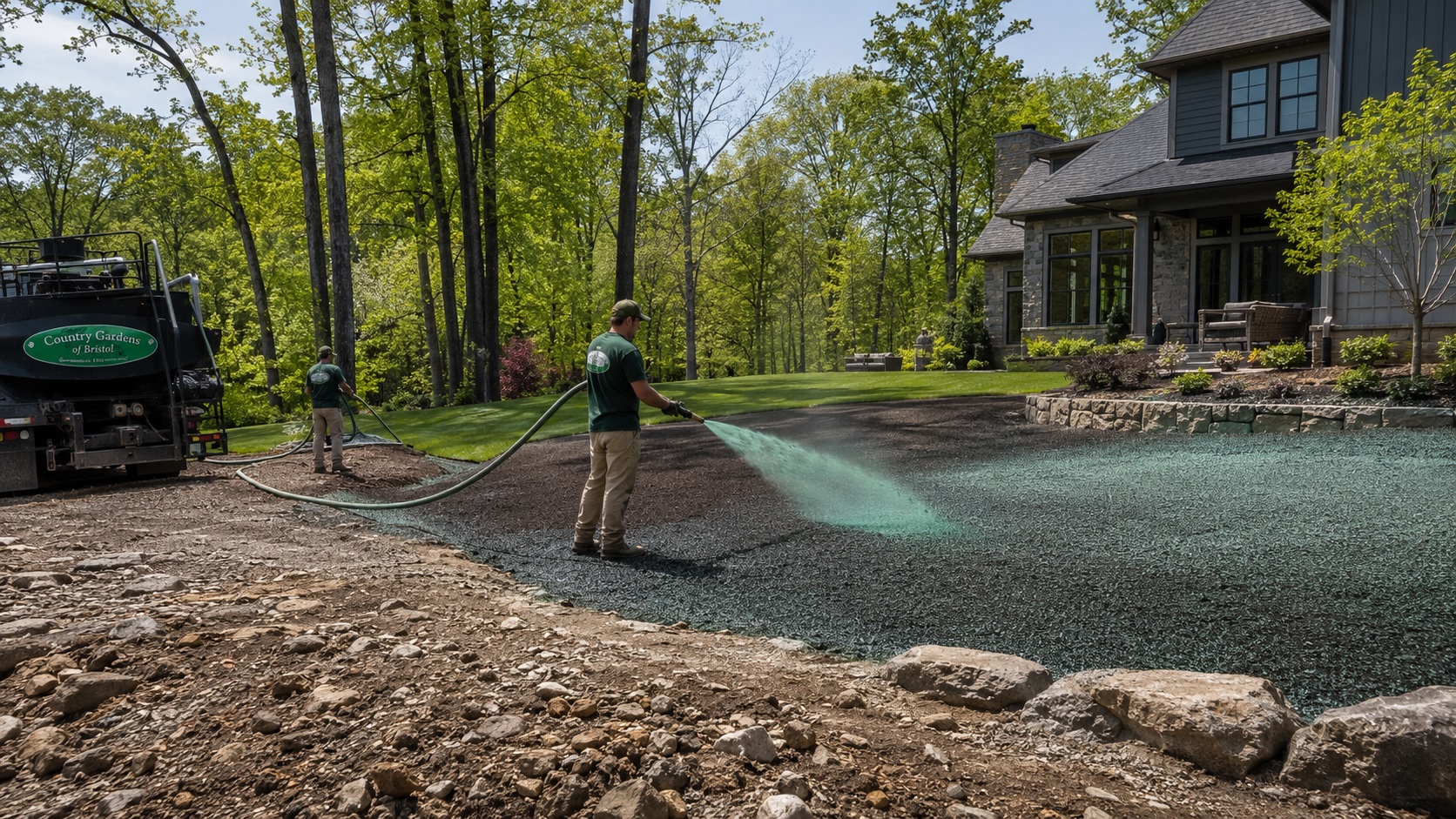
Hydroseeding can create a thick, healthy lawn faster than traditional dry seeding, but it cannot perform well on hard, compacted, unprepared dirt. For many Connecticut homeowners, that is the missing step.
A hydroseed truck can apply seed, mulch, fertilizer, and water in an even slurry, but roots still need a seedbed that can breathe, drain, hold moisture, and support new turf. If the yard is compacted clay, construction fill, exposed ledge rock, or rough subsoil, the lawn may start uneven, wash out, dry out, or struggle before it ever gets established.
At Country Gardens of Bristol, our hydroseeding work is built around preparation first. The company’s hydroseeding service page notes that areas should be cleared of large rocks, debris, and old vegetation, and that Country Gardens can handle professional grading and soil preparation before hydroseeding.
How Should a Yard Be Prepped for Hydroseed?
To prep a yard for hydroseed, the soil should be cleared, loosened, graded, amended with quality screened topsoil or compost blends when needed, lightly compacted, and shaped for drainage before the hydroseed slurry is sprayed. On Connecticut clay and ledge rock sites, mechanical aeration, rough grading, fine grading, and lawn soil preparation are often just as important as the seed mix itself.
A better lawn starts below the surface.
Why Hydroseed Fails on Hard Connecticut Dirt
Homeowners often ask how to prep yard for hydroseed after a lawn has already failed once. The issue is usually not the hydroseed alone. The issue is the ground beneath it.
Common Connecticut lawn problems include:
- Compacted clay
- Thin topsoil over ledge rock
- Construction fill from a recent build
- Gravelly subsoil
- Poor drainage
- Uneven grading
- Standing water
- Steep slopes
- Erosion channels
- Old roots and debris
- Hardpan that blocks root growth
Rutgers Extension explains that soil compaction reduces pore space between soil particles, which limits air and water movement needed for plant growth. That matters because grass roots need oxygen, moisture, and room to expand. When the soil is sealed tight, the seed may germinate but fail to establish strong roots.
Hydroseeding Is Not a Shortcut Around Site Prep
Hydroseeding is a strong tool, but it is not magic paint for bad soil.
Hydroseeding as a cost-effective method that supports even coverage, rapid growth, and erosion-resistant turf, with uses for new lawns, patchy yards, slopes, and erosion control.
That value comes through when the seedbed is ready. If slurry is sprayed over hard clay, exposed rocks, or lumpy fill, the lawn may show:
- Patchy germination
- Thin grass along high spots
- Washout after rain
- Standing water in low areas
- Shallow roots
- Fast summer stress
- Weeds filling bare sections
- Poor mower performance due to uneven grade
Hydroseeding should be the final establishment step, not the only step.
Step 1: Site Walk and Soil Review
Every successful lawn starts with a site walk.
Our team looks at the whole yard before recommending hydroseeding. This includes slope, sunlight, drainage, existing soil, access for equipment, problem areas, and any signs that the ground was disturbed during construction.
We evaluates soil composition, sun exposure, and drainage patterns during the planning process. That same technical mindset applies to lawn soil preparation.
During the site review, key questions include:
- Is the soil compacted?
- Does water drain away from the home?
- Are there ledge rock areas near the surface?
- Is there enough topsoil depth for turf?
- Are low spots holding water?
- Are slopes likely to wash out?
- Does the yard need rough grading first?
- Can machinery access the lawn area safely?
- Is irrigation needed for establishment?
Step 2: Clearing Rocks, Roots, and Debris
Hydroseed needs contact with prepared soil. Before grading or topsoil work, the area should be cleared of large rocks, stumps, construction debris, old vegetation, and surface obstructions.
This step matters on Connecticut properties where buried rock, ledge fragments, and construction leftovers are common. If debris remains, roots hit barriers, mower blades strike high spots, and water collects around uneven areas.
A clean surface also helps the final grade stay smoother.
Step 3: Mechanical Loosening and Aeration
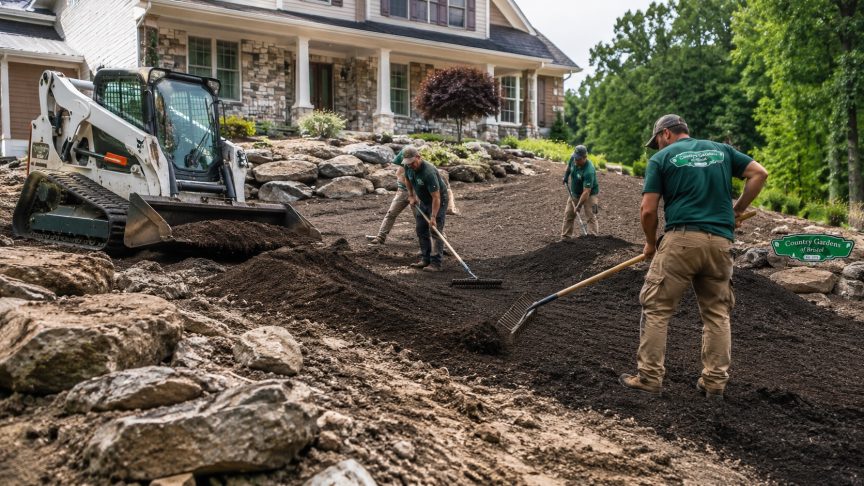
Compacted clay does not become lawn-ready just because seed touches it. It needs to be opened.
Mechanical loosening, aeration, tilling, or scarifying can help break the sealed surface so water, oxygen, and roots can move through the soil. The right method depends on the condition of the yard.
For compacted sites, the goal is to create a more porous seedbed without turning the yard into unstable mud. Working clay when it is too wet can make compaction worse, so timing matters.
The best results often come from:
- Loosening the upper soil layer
- Breaking surface crusting
- Removing large stones
- Avoiding overworking wet clay
- Blending amendments into the root zone
- Preparing a firm but open seedbed
Step 4: Add Screened Topsoil and Compost Blends When Needed
Many homeowners search for topsoil delivery near me because the existing yard soil is too thin, rocky, or poor for grass. That can be the right move, but only when the material is spread and blended properly.
Good lawn soil should help roots access moisture, nutrients, and oxygen. UConn’s soil testing guidance notes that soil testing helps assess pH, nutrient levels, imbalances, excesses, and deficiencies in lawn and garden areas.
For hydroseeding success, screened topsoil and compost blends can help:
- Improve organic matter
- Fill shallow low spots
- Cover exposed ledge or rocky subsoil
- Improve water holding ability
- Support better root development
- Create a smoother seedbed
- Reduce stress during establishment
The key is balance. A heavy layer of loose topsoil over compacted clay can create a shallow sponge over a hard pan. A better approach may include loosening the existing soil first, then blending high-organic screened topsoil or compost into the prepared zone.
Step 5: Rough Grading for Shape and Drainage
Before any fine grading happens, the yard needs the right shape.
Rough grading sets the overall slope of the lawn. It moves soil where needed, removes major highs and lows, and helps water travel away from the home, patios, driveways, walkways, and low-lying yard areas.
A grading and excavating contractor can make a major difference at this stage because small grade errors become big lawn problems later.
Poor rough grading can cause:
- Water against the foundation
- Washouts on slopes
- Wet low spots
- Thin grass on high spots
- Seed loss after storms
- Drainage problems near hardscapes
- Uneven mowing
Step 6: Fine Grading for a Seed-Ready Surface
Fine grading is where a rough yard becomes a hydroseed-ready lawn.
The goal is not powdery loose soil. The goal is a smooth, firm, lightly textured seedbed that gives seed contact while still allowing water and roots to move.
Fine grading helps:
- Smooth mower bumps
- Eliminate pockets where water sits
- Remove small stones
- Even out topsoil depth
- Create seed-to-soil contact
- Shape drainage across the surface
- Prepare the lawn for uniform slurry coverage
This is one of the most overlooked parts of fixing bad lawn conditions. If the soil surface is uneven, hydroseed will follow that uneven surface.
Step 7: Light Compaction Without Sealing the Surface
After topsoil and grading, the lawn area should be firm enough to walk across without sinking deeply. But it should not be packed so hard that roots cannot enter.
Too loose can lead to settling and rutting. Too hard can block germination and shallow roots.
The best seedbed feels stable, level, and slightly open at the surface. That balance helps hydroseed stay in place and allows young roots to move downward after germination.
Step 8: Plan Water Before the Truck Arrives
Hydroseeding needs consistent moisture during establishment. Without a water plan, even the best-prepared seedbed can dry out.
For new hydroseed, homeowners should prepare for:
- Gentle watering
- Frequent moisture checks
- Avoiding puddles and runoff
- Protecting slopes from washout
- Adjusting watering during hot weather
- Keeping foot traffic off new areas
Irrigation is not always required, but a clear watering plan is.
Clay Soil Needs Organic Matter, Not Shortcuts
Clay soil can hold nutrients, but it can also drain slowly and compact tightly. Adding organic matter can improve soil structure, water movement, and root conditions over time.
Oregon State Extension explains that organic matter supports soil structure, stable pore spaces, water movement, and soil organisms that help hold soil together.
For lawns, that means compost and screened topsoil blends can support better long-term performance when incorporated correctly. The goal is to build soil that drains, breathes, and holds enough moisture without becoming sticky or sealed.
Ledge Rock Sites Need Soil Depth
Some Connecticut yards have ledge rock close to the surface. Grass can grow over shallow soil, but it struggles when there is not enough root depth to handle heat, drought, and foot traffic.
On ledge-heavy sites, lawn soil preparation may require:
- Removing loose rock fragments
- Filling shallow areas with screened soil
- Building a consistent soil layer
- Fine grading around exposed stone
- Redirecting runoff
- Choosing turf areas carefully
- Using mulch, plantings, or hardscape where grass is not practical
Not every rocky section should become lawn. Sometimes the best landscape plan uses turf where soil depth supports it and transitions to hardscaping, planting beds, or stone features where ledge makes grass difficult. Country Gardens of Bristol offers hardscaping for patios, walkways, retaining walls, and sloped yard solutions.
Fixing Bad Lawn Conditions Before Hydroseeding
Fixing bad lawn areas usually requires identifying the reason the lawn failed.
Common causes include:
- Compaction from construction equipment
- Poor seedbed preparation
- Thin topsoil
- Too much shade
- Drought stress
- Poor watering
- Drainage problems
- Heavy clay
- Low fertility
- Sloped washout
- Weed competition
- Wrong grass mix
Hydroseeding can help restart the lawn, but the repair plan should match the cause. A patchy lawn from compaction needs aeration and soil work. A washout-prone slope needs grading and erosion control. A dry yard may need soil amendments and irrigation planning.
Our Hydroseeding Prep Process
At Country Gardens of Bristol, our lawn prep process can include:
- Site review and lawn condition assessment
- Clearing debris, rocks, old vegetation, and roots
- Mechanical loosening or aeration where needed
- Rough grading to correct shape and drainage
- Topsoil or compost blend installation when needed
- Fine grading for an even seedbed
- Light compaction for surface stability
- Hydroseed application with the right lawn mix
- Watering guidance for establishment
- Follow-up recommendations for mowing and care
This process helps turn compacted clay, rough fill, and rocky soil into a more reliable foundation for new turf.
Local Hydroseeding and Lawn Soil Preparation in Central Connecticut
Connecticut lawns are not all the same. A Bristol yard may have dense clay and old construction fill. A Plainville property may need grading after hardscape work. A Southington lawn may need erosion control on a slope. A Farmington or Burlington property may have ledge rock, wooded shade, or drainage concerns.
Country Gardens of Bristol serves Bristol and surrounding Central Connecticut communities, including Farmington, Plainville, Southington, Wolcott, Plymouth, Harwinton, and Burlington through its landscaping service area pages.
For homeowners searching for how to prep yard for hydroseed, topsoil , lawn soil preparation, grading and excavating contractor, or fixing bad lawn problems, local soil knowledge matters.
Hydroseeding Works Best on Prepared Soil
Hydroseeding is a powerful lawn establishment method, but the best results come from the right foundation. Connecticut’s compacted clay, ledge rock, construction fill, and drainage challenges require more than spray-on seed.
A successful lawn starts with mechanical soil preparation, thoughtful grading, high-organic screened topsoil or compost blends, and a watering plan that supports germination. Once the soil can breathe, drain, and hold nutrients, hydroseeding has a much better chance to deliver the thick, green lawn homeowners expect.
At Country Gardens of Bristol, our team helps homeowners move from hard, unrefined dirt to a properly prepared seedbed built for long-term turf success.
FAQs
How should a yard be prepped for hydroseed?
A yard should be cleared, loosened, graded, amended when needed, fine-graded, and lightly firmed before hydroseeding. The goal is a smooth, porous seedbed with good seed contact and proper drainage.
Can hydroseed grow on compacted clay?
Hydroseed can germinate on clay, but compacted clay often limits root growth, air movement, and drainage. Mechanical loosening, aeration, and organic soil amendments can improve the seedbed before hydroseeding.
Is topsoil needed before hydroseeding?
Topsoil may be needed when the existing soil is thin, rocky, compacted, or mostly construction fill. Screened topsoil or compost blends can help create a better growing layer when properly installed.
Why does hydroseed wash away on slopes?
Hydroseed can wash away when slopes are too steep, soil is poorly graded, drainage is unmanaged, or heavy rain hits before establishment. Proper grading and erosion planning help reduce washout risk.
Can Country Gardens of Bristol handle grading before hydroseeding?
Yes. Country Gardens of Bristol can handle grading and soil preparation as part of the hydroseeding process, helping create a stronger foundation before the slurry is applied.