Compacted soil in a lawn develops when foot traffic, heavy equipment, construction activity, or repeated pressure compresses soil particles and reduces the spaces needed for air, water, and root growth. Connecticut lawns with fine-textured soil are particularly vulnerable when wet. The most effective solutions include core aeration, reducing traffic on saturated ground, correcting drainage problems, and improving soil structure over time. Severely compacted lawns may also require professional soil preparation and overseeding.
Why Is My Lawn Soil So Hard and Compacted?
Does your lawn feel hard as concrete, even after watering? Are some areas thin, muddy, or struggling to grow grass?
At Country Gardens of Bristol, we help Connecticut homeowners identify the underlying soil conditions that prevent healthy lawn growth.
Lawn compaction occurs when soil particles become pressed tightly together, leaving fewer spaces for water and oxygen.
Grass roots need those spaces to grow deeper and absorb nutrients.
When soil becomes excessively compacted, even regular fertilizing and watering may fail to produce a healthy lawn.
Understanding what causes lawn compaction is the first step toward repairing it.
7 Common Causes of Compacted Lawn Soil
1. Heavy Foot Traffic
Repeated walking across the same sections of lawn gradually compresses the soil.
This commonly occurs near patios, gates, sidewalks, play areas, and backyard entrances.
We recommend redirecting regular foot traffic or installing stepping stones where grass continually struggles.
2. Walking or Mowing on Wet Soil
Saturated soil is particularly vulnerable to compaction.
When heavy rain or spring snowmelt leaves the ground soft, walking and mowing can compress soil particles.
We recommend waiting until the ground becomes sufficiently firm before performing lawn maintenance.
3. Construction and Heavy Equipment
Newly built homes often have severely compacted soil beneath their lawns.
Excavators, delivery trucks, loaders, and other construction equipment can compress soil during site preparation.
In some cases, builders also remove or disturb the original topsoil, leaving dense subsoil near the surface.
We recommend evaluating soil depth and structure before attempting lawn restoration.
4. Fine-Textured or Clay-Heavy Soil
Many Connecticut properties contain soil with substantial amounts of clay or silt.
These soils can become dense when exposed to repeated pressure, particularly when wet.
However, clay soil is not automatically compacted.
How the soil is structured and managed matters more than clay content alone.
5. Repeated Lawn Equipment Traffic
Riding mowers and other equipment can compact soil when they repeatedly travel along the same paths.
This becomes especially noticeable near lawn edges, narrow passages, and equipment access points.
We recommend varying mowing patterns and avoiding heavy machinery when soil conditions are unsuitable.
6. Poor Drainage and Repeated Saturation
Low spots, improper grading, and concentrated runoff can leave sections of lawn saturated.
Although poor drainage does not always originate from compaction, repeatedly using wet areas makes compaction more likely.
We recommend identifying where excess water originates before installing drainage improvements.
7. Weak Soil Structure and Bare Ground
Healthy soil contains aggregates that help maintain spaces for air and water.
When soil structure deteriorates and grass coverage becomes thin, exposed areas can develop surface crusting from rainfall and repeated disturbance.
Organic matter and healthy root growth help support better soil structure.
We recommend improving the underlying soil rather than repeatedly applying grass seed to hard ground.
How to Tell if Your Lawn Soil Is Compacted
Several symptoms can help homeowners identify lawn compaction.
| Lawn Symptom | Possible Explanation |
|---|---|
| Ground feels extremely hard | Dense or dry soil |
| Water puddles after rain | Restricted infiltration or poor grading |
| Grass grows thin near walkways | Repeated foot traffic |
| Roots remain shallow | Restricted root development |
| Soil is difficult to penetrate | Possible compaction |
| Grass struggles during summer | Limited root access to moisture |
Try the Screwdriver Test
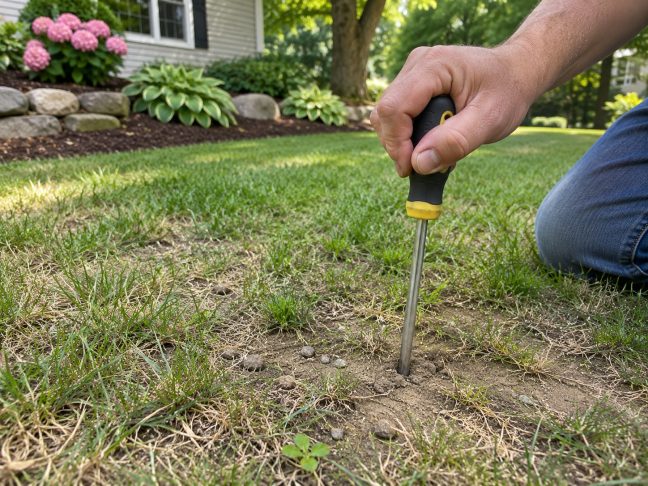
A simple screwdriver test can help identify suspicious areas.
After moderate rainfall, when the soil is moist but not saturated, gently push a long screwdriver into the lawn.
If the tool penetrates easily in healthy areas but encounters significant resistance elsewhere, the harder sections may be compacted.
However, very dry soil, stones, and buried construction debris can produce similar resistance.
For more information, Cornell University’s Turfgrass Program recommends examining soil structure and using core aeration where compaction is present.
How to Fix Compacted Soil in Your Lawn
1. Use Core Aeration
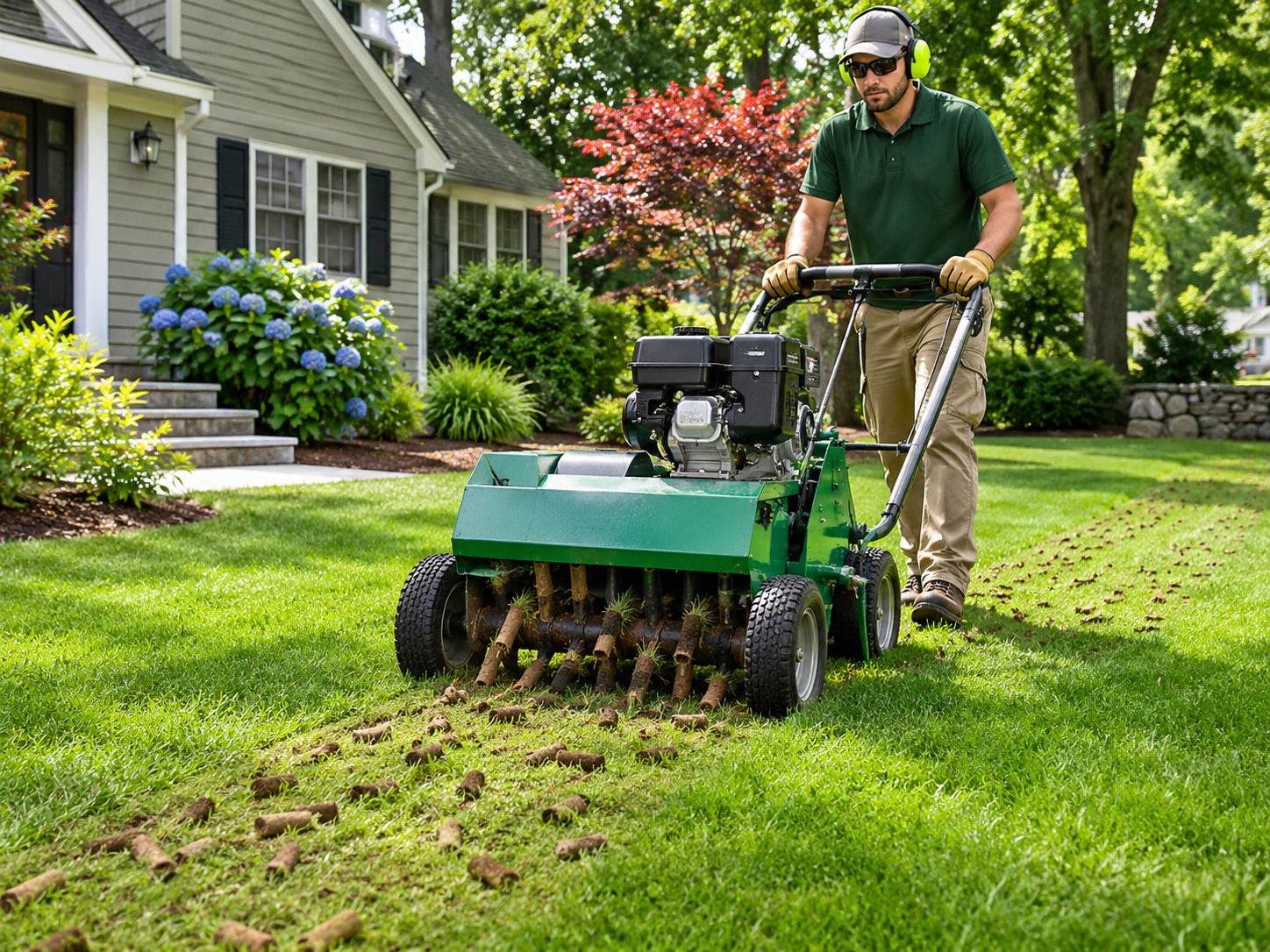
Core aeration is one of the most effective treatments for compacted established lawns.
A core aerator removes small plugs of soil, creating openings that improve air and water movement into the root zone.
Unlike spike aeration, which pushes soil sideways, core aeration physically removes material.
We recommend completing aeration when soil is slightly moist and grass is actively growing.
For Connecticut’s cool-season lawns, late August through September is generally an excellent time.
2. Apply Suitable Compost Topdressing
After aeration, a thin application of mature, screened compost may gradually improve soil structure and biological activity.
Compost does not instantly eliminate deep compaction, but repeated appropriate applications can support healthier soil over time.
Avoid covering existing grass with excessive material.
3. Correct Drainage Problems
If water repeatedly collects in the same locations, aeration alone may not solve the problem.
We recommend evaluating grading, runoff, and underground drainage conditions.
Persistent standing water may require surface regrading or professionally designed drainage improvements.
4. Overseed Thin or Damaged Areas
After addressing compaction, overseeding helps restore grass density.
We recommend choosing cool-season grass varieties suitable for the property’s sunlight, moisture, and traffic conditions.
For extensive bare areas, our hydroseeding services in Bristol, CT provide a lawn establishment option after proper soil preparation.
5. Prevent Future Compaction
Long-term lawn improvement requires changing the conditions that caused the problem.
We recommend limiting traffic on wet soil, adjusting equipment routes, maintaining healthy grass coverage, and monitoring drainage.
For additional guidance, read our related article, Fall Lawn Aeration and Overseeding in Connecticut.
When Is the Best Time to Aerate a Connecticut Lawn?
| Season | Recommendation |
|---|---|
| Spring | Possible during active growth when soil is not saturated |
| Summer | Avoid during extreme heat or drought stress |
| Early Fall | Preferred for most cool-season lawns |
| Winter | Avoid frozen or saturated ground |
Fall aeration can also be coordinated with overseeding to improve seed-to-soil contact and support establishment before winter.
Frequently Asked Questions
Can compacted soil fix itself naturally?
Minor surface compaction may gradually improve through healthy root growth and biological activity. Severe compaction usually requires additional intervention.
Does watering loosen compacted soil?
Watering temporarily softens dry soil but does not permanently correct compaction. Excessive watering may worsen conditions when the ground becomes saturated.
How often should you aerate a compacted lawn?
High-traffic lawns may benefit from annual core aeration, while less-compacted properties may need treatment less frequently.
Can you put topsoil over compacted ground?
Adding topsoil alone may not correct compacted layers beneath the surface. Soil preparation and drainage correction should come first.
Will grass grow in heavily compacted soil?
Grass may grow, but restricted root development can cause thinning, drought stress, and poor long-term establishment.
Restore Healthy Lawn Soil With Country Gardens of Bristol
Compacted soil can prevent your lawn from reaching its full potential, even with consistent watering and fertilization.
At Country Gardens of Bristol, we help homeowners throughout Bristol, Farmington, Plainville, Southington, Wolcott, and surrounding Connecticut communities improve lawn conditions through soil preparation, lawn restoration, hydroseeding, and professional landscaping.
Whether you’re dealing with hard soil, poor drainage, or thin grass, we’ll help identify the underlying problem and recommend an appropriate solution.