Country Gardens of Bristol installs artificial turf for homeowners who want a clean, green lawn without constant mowing, watering, reseeding, and muddy patch repair. Our team builds each surface around the way the yard is used, whether the goal is a pet area, play space, pool border, side yard, courtyard, putting green, or full artificial turf lawn replacement.
A lasting synthetic lawn depends on what happens below the surface. Before any turf is placed, the site is reviewed for grade, runoff, soil conditions, edging, access, traffic, and how the new green space connects with patios, walkways, beds, and outdoor living areas. For larger upgrades, this service can be paired with landscape design, hardscaping, irrigation adjustments, planting beds, and full yard renovation planning.
What is Artificial Turf?
Artificial turf is a manufactured grass surface designed to create the look and function of a maintained lawn. Modern synthetic grass systems include durable fibers, engineered backing, drainage openings, compacted base layers, secure seams, and infill that helps support the blades.
A proper installation is not simply rolled over dirt. The existing lawn or soil is excavated, shaped, compacted, and rebuilt with a stable stone base so the finished surface drains well and stays smooth through Connecticut rain, snow, thaw cycles, and regular foot traffic.
Common uses include:
- Backyard lawn replacement
- Pet turf and dog runs
- Children’s play areas
- Poolside green space
- Shaded side yards
- Courtyard grass areas
- Putting greens
- Commercial landscape areas
- Low-maintenance rental properties
The Benefits of Synthetic Turf in the Connecticut Climate
Connecticut lawns deal with spring moisture, summer heat, shaded growth problems, fall debris, and winter freeze-thaw movement. It gives Bristol homeowners a cleaner and more predictable lawn surface when natural grass struggles to stay even, dry, and usable.
It works especially well in compacted soil, shaded areas, pet paths, narrow walkways, and spaces beside patios or fences. With the correct base preparation, synthetic grass can reduce mud, improve everyday use, and keep the yard looking finished through every season.
Key benefits include:
- Year-round curb appeal
The surface stays green through dry spells, shaded areas, and colder months. - Less lawn maintenance
No weekly mowing, fertilizing, aerating, overseeding, or patch repair is needed. - Better mud control
A compacted aggregate base and permeable backing help move water through the system. - Reliable use in shaded areas
Synthetic grass performs well where natural grass often thins out under trees, beside fences, or between buildings. - Lower watering demand
Routine irrigation is not needed for growth, though rinsing may still be useful for pets or cooling. - Pet-friendly yard function
Dedicated pet turf systems can help manage wear, drainage, and odor. - Clean hardscape transitions
Turf can be shaped around patios, pavers, retaining walls, fire pits, pool decks, and walkways.
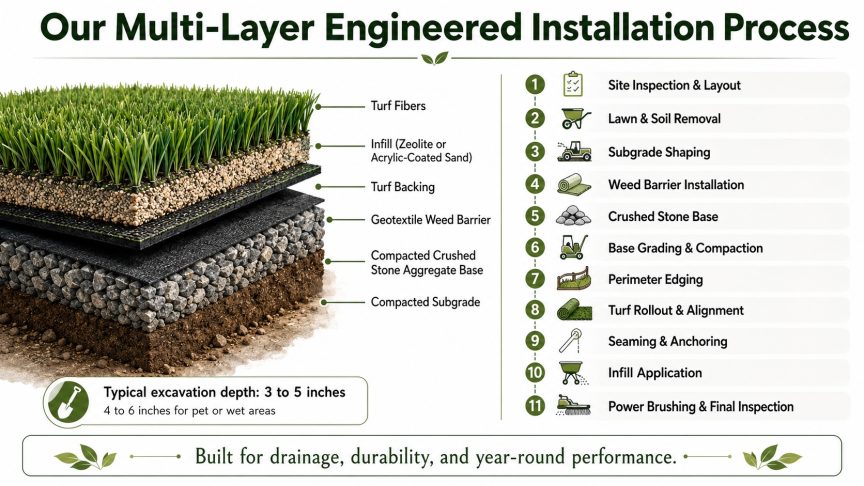
Our Multi-Layer Engineered Installation Process
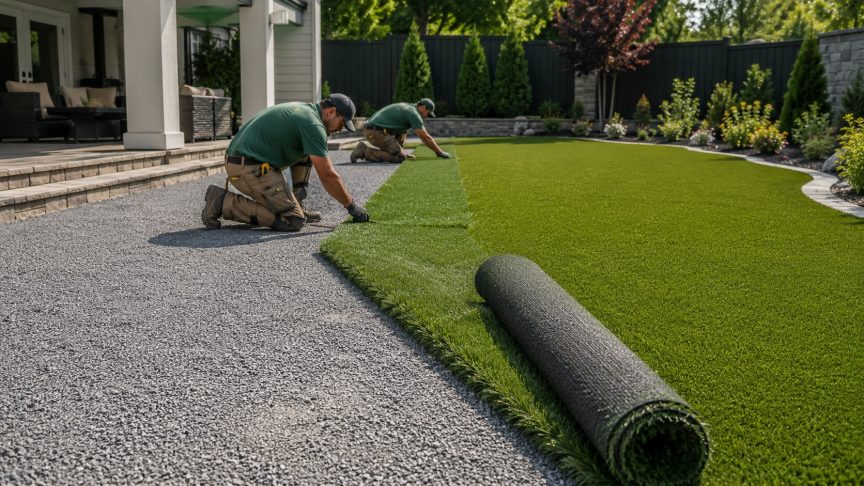
A long-lasting synthetic grass lawn replacement starts with excavation, grading, drainage planning, base compaction, clean seaming, and finish brushing. Country Gardens of Bristol follows a detailed process so the surface looks natural and performs correctly.
- Site inspection and layout planning
The area is measured and reviewed for slope, runoff, access, shade, pet use, traffic level, and connection points to patios, beds, fences, walkways, or hardscaping. - Existing lawn and soil removal
Grass, weeds, roots, and soft organic material are removed. Most residential areas are excavated about 3 to 5 inches below finished grade. Wet areas, pet zones, and higher-use spaces may need deeper preparation. - Subgrade shaping and compaction
The exposed soil is graded to move water away from structures and low spots. The subgrade is compacted to create a stable foundation. - Geotextile weed barrier installation
A permeable fabric may be installed to separate soil from the stone base, reduce weed pressure, and support long-term stability without blocking drainage. - Crushed stone aggregate base installation
A compactable stone base is installed in lifts. The aggregate may include processed stone, clean crushed stone, crusher fines, or a similar blend selected for drainage and stability. - Base grading and compaction
The base is raked, shaped, and mechanically compacted to create the final contour and reduce the risk of sinking, wrinkles, or uneven spots. - Perimeter edging and border preparation
Edges are secured against pavers, concrete, edging, restraints, planting beds, or hardscape borders to keep the system tight and clean. - Turf rollout and grain alignment
Synthetic grass is rolled out, relaxed, positioned, and cut to fit the space. The grain direction is aligned for a natural appearance. - Seaming and anchoring
Seams are joined with turf seam tape and adhesive when needed. The surface is trimmed and anchored along the perimeter. - Infill selection and application
Infill is spread and brushed into the fibers. Zeolite is often recommended for pet areas because it helps control ammonia odor. Acrylic-coated sand can support clean appearance, ballast, and blade stability. - Power brushing and final inspection
The surface is brushed upright, seams are checked, edges are cleaned, and the finished area is inspected for appearance, stability, and drainage.
Specialized Pet Turf Systems for Connecticut Homeowners
Pet turf is designed for concentrated traffic, urine exposure, odor control, and repeat wear. A dog-friendly lawn area needs strong drainage from the surface through the base, not just a realistic-looking grass product.
Country Gardens of Bristol installs pet systems that focus on cleanliness, durability, and easier maintenance. A pet-friendly area may include:
- Specialized drainage backing
Permeable backing allows urine and rinse water to move through quickly. - Free-draining stone base
Clean crushed stone helps water move away from the surface and reduces trapped moisture. - Non-toxic antimicrobial fibers
Pet-safe fibers may include antimicrobial technology to help reduce bacteria growth on the surface. - Odor-neutralizing infill
Zeolite infill helps absorb and neutralize ammonia odors from pet urine. - Easy rinse maintenance
Regular rinsing and pet-safe enzyme cleaners can help keep high-use dog areas fresh. - Less mud near doors and fences
Artificial turf for pets is useful near back doors, gates, kennel zones, narrow side yards, and fenced areas where natural grass gets worn down.
For Bristol homeowners, a pet area can be built as a dedicated dog run, a small relief zone, or a larger backyard lawn replacement. The right design depends on dog size, number of pets, traffic, drainage conditions, and how the space connects to the rest of the property.
Why Choose Country Gardens of Bristol?
Country Gardens of Bristol brings local landscaping experience, site preparation knowledge, and outdoor construction planning to every project. Artificial grass performs best when the installer understands grading, drainage, base behavior, hardscape transitions, and Connecticut property conditions.
Our team can help with:
- Lawn replacement
- Pet turf and dog runs
- Synthetic grass around patios and walkways
- Turf installation beside pools and outdoor living areas
- Putting green planning
- Drainage-conscious base preparation
- Landscape renovation around turf areas
- Turf and hardscape combinations
- Low-maintenance yard upgrades
Frequently Asked Questions
How much does it cost in Bristol CT?
Artificial turf installation in Bristol, CT typically costs about $14 to $26 per square foot for most residential landscape and pet turf projects. Putting greens, complex drainage work, tight access, and premium products can cost more.
Is it good for Connecticut weather?
Yes. It can work well in Connecticut when installed over a properly excavated, compacted, and free-draining aggregate base. The base helps manage rain, snowmelt, and freeze-thaw movement.
Does artificial turf drain after heavy rain?
Yes, properly installed artificial turf drains through the turf backing and into the crushed stone base below. Drainage performance depends on the turf backing, base depth, soil conditions, grading, and whether extra drainage work is needed.
Can dogs pee on artificial grass?
Yes. Dogs can use pet turf, but the system should include permeable backing, a free-draining base, and odor-neutralizing infill such as zeolite. Routine rinsing helps keep the area clean.
What is the best artificial turf for dogs?
The best artificial turf for dogs is a pet-specific product with strong drainage, durable fibers, non-toxic materials, antimicrobial protection, and odor-control infill. The base below the turf is just as important as the turf product itself.
Does it smell when dogs use it?
Pet turf can develop odor if urine sits in the system. Odor is controlled by using proper drainage, zeolite infill, regular rinsing, and pet-safe enzyme cleaners when needed.
How long does synthetic turf last in Connecticut?
Quality cover materials can last 10 to 15 years or more depending on turf grade, sun exposure, foot traffic, pet use, maintenance, and installation quality.
Does fake grass need a base layer?
Yes. It should not be installed directly over loose soil for permanent landscape use. A compacted crushed stone base helps support drainage, stability, and a smooth finished surface.
Can it be installed over dirt?
Yes, it can be installed where dirt exists, but the soil must usually be excavated and replaced with a compacted aggregate base. Installing turf directly over dirt can lead to drainage problems, weeds, wrinkles, and uneven settling.
Does it get hot in summer?
Yes. it can get warmer than natural grass in direct sun. Turf selection, lighter infill options, surrounding shade, and rinsing the surface can help manage heat during hot summer days.
Is it safe for kids?
Yes, many products are designed for family use. For play areas, the right turf, padding, base preparation, and infill should be selected based on fall protection, drainage, and traffic.
Do weeds grow through artificial turf?
A properly installed system with excavation, geotextile fabric, compacted base, secure seams, and clean edges greatly reduces weed growth. Some surface weeds may still appear from wind-blown seeds and can be removed during routine maintenance.
Do you need irrigation with it?
It does not need irrigation to grow. Some homeowners still use water to rinse pet areas, cool the surface during summer, or maintain nearby planting beds.
Can it be installed around patios and walkways?
Yes. It can be cut and secured around patios, paver walkways, stepping stones, pool decks, retaining walls, and outdoor living spaces. Proper edging keeps the turf clean and stable.
Who installs artificial turf near me in Bristol CT?
Country Gardens of Bristol installs artificial turf in Bristol, CT for lawns, pet areas, play spaces, side yards, and low-maintenance landscape upgrades. The team also provides landscape design, hardscaping, irrigation, hydroseeding, and full outdoor improvement services. The company’s current site lists these related services and contact options.
Let’s create a garden you’ll love
Let’s turn your outdoor space into something beautiful. Get in touch for a free consultation today.