
Privacy is one of the most common reasons homeowners call a local landscape design company. A backyard may feel too exposed to neighbors. A pool area may need softer separation. A patio may need shade and screening. A corner lot may need visual buffering from road traffic.
At Country Gardens of Bristol, we design privacy landscapes for Central Connecticut homes with more than one row of the same evergreen. Arborvitae is popular for a reason, but it is not always the best answer for every Bristol, Farmington, Plainville, Southington, Wolcott, Plymouth, Harwinton, or Burlington property.
For homeowners searching landscaping for privacy, fast growing privacy trees, privacy hedges, screen planting CT, or a local landscape design company, a layered privacy screen can offer better texture, better resilience, and a more natural look.
Why Standard Arborvitae Is Not Always Enough
Arborvitae can create a fast, narrow green wall, but many Central CT properties need more durability and design depth. A single straight row may look good at planting, yet it can struggle when deer pressure, heavy snow, tight spacing, poor drainage, or winter exposure enters the picture.
Common arborvitae problems include:
- Deer browsing along the lower branches
- Snow bending or splitting upright growth
- Thin spots after poor spacing
- One dead plant creating a visible gap
- Harsh “green wall” appearance
- Limited seasonal interest
- Weak privacy if lower branches are damaged
We still use arborvitae when the site is right. But for stronger screen planting CT projects, we often recommend a privacy matrix that combines evergreen structure, ornamental texture, seasonal color, and hardscape elements.
What Is a Privacy Screening Matrix?
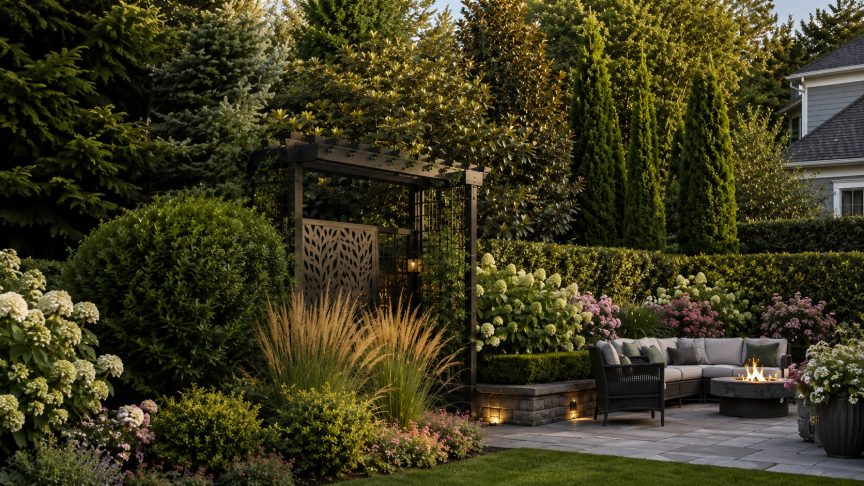
A privacy screening matrix is a layered landscape design plan that uses different plant heights, growth habits, textures, and structures to create a more complete privacy solution.
Instead of one row of identical trees, the design may include:
- Tall evergreen anchors
- Mid-height flowering shrubs
- Deer-conscious plant choices
- Ornamental grasses
- Structural fencing or panels
- Stone walls or berms
- Shade trees placed for sightline control
- Low plantings to soften the base
This approach gives the yard privacy without making the property feel boxed in.
Layer 1: Tall Evergreen Anchors
The back layer creates the main screen. These plants help block views from second-story windows, neighboring yards, roadways, and open property lines.
Strong evergreen options may include:
- Spruce varieties for dense year-round coverage
- Eastern red cedar for rugged screening
- Holly varieties for broadleaf evergreen texture
- False cypress for soft color and form
- Mixed conifers for year-round structure
A mixed evergreen row is often stronger than one repeated species. If one plant struggles, the entire screen does not fail visually.
Layer 2: Mid-Height Privacy Hedges
The second layer fills the middle zone. This is where privacy hedges can create density at eye level from patios, decks, pools, and outdoor kitchens.
Useful mid-layer options may include:
- Viburnum
- Inkberry holly
- Hydrangea
- Bayberry
- Witch hazel
- Red twig dogwood
- Mixed flowering shrubs
This layer softens the evergreen backdrop and adds seasonal interest. Flowers, berries, fall color, and branch texture make the screen feel designed rather than planted in a straight utility row.
Layer 3: Ornamental Texture and Ground-Level Coverage
The lower layer hides trunks, fills gaps, and helps the planting bed look complete.
Good lower-layer choices may include:
- Ornamental grasses
- Perennials
- Ferns for shaded areas
- Low evergreen shrubs
- Native-style pollinator plants
- Groundcovers for slope control
This layer is especially useful near patios and walkways where privacy needs to feel polished up close.
Layer 4: Structural Privacy Elements
Plants are not the only privacy tool. Sometimes the strongest design uses a mix of plants and built structure.
A privacy plan may include:
- Decorative fencing
- Horizontal screen panels
- Stone walls
- Seat walls
- Pergolas
- Raised planting beds
- Berms
- Trellises with vines
The Privacy Screening Matrix
Use this simple matrix as a planning guide:
| Privacy Goal | Best Design Layer | Recommended Approach |
|---|---|---|
| Block neighbor views | Tall evergreen anchors | Mixed conifers or broadleaf evergreens |
| Hide patio sightlines | Mid-height shrubs | Viburnum, holly, hydrangea, or bayberry groupings |
| Soften a fence | Lower planting layer | Ornamental grasses, perennials, and low shrubs |
| Add instant privacy | Structural layer | Fence panels, pergola, wall, or berm |
| Reduce deer damage risk | Mixed planting plan | Avoid relying on one deer-favorite plant |
| Add winter interest | Evergreen and branch texture | Holly, spruce, red twig dogwood, grasses |
| Screen a pool area | Multi-layer planting | Evergreens plus shrubs plus ornamental grasses |
| Protect curb appeal | Designed plant rhythm | Staggered spacing with varied textures |
Fast Growing Privacy Trees Need Smart Spacing
Many homeowners search for fast growing privacy trees because they want coverage quickly. Fast growth can help, but spacing matters more than speed.
Plant too close, and the screen may become crowded, thin, or disease-prone. Plant too far apart, and the privacy goal may take too long. The best spacing depends on mature plant width, site drainage, sun exposure, deer pressure, and how much room exists between the property line and outdoor living area.
We design privacy screens around mature size, not just the plant tag at the nursery.
Better Alternatives to a Single Arborvitae Row
A more resilient privacy design may look like this:
Back row: staggered spruce, cedar, holly, or false cypress
Middle row: viburnum, inkberry, hydrangea, or bayberry
Front row: ornamental grasses, perennials, and low evergreens
Structural detail: fence panel, stone edge, or raised berm where instant privacy is needed
This creates depth, movement, and better long-term performance.
Privacy Landscaping for Central Connecticut Homes
Central Connecticut landscapes face a mix of winter snow, deer pressure, clay soils, slopes, wet pockets, summer heat, and established neighborhoods with tight sightlines. A privacy screen in Bristol may need a different approach than a wide backyard in Burlington or a pool area in Southington.
Country Gardens of Bristol serves local homeowners with residential landscaping, landscape design, irrigation, hydroseeding, and full outdoor planning services.
Our privacy designs can support homes across:
Irrigation Matters for New Privacy Screens
New privacy plantings need consistent water during establishment. Even tough evergreens and shrubs can struggle during dry spells if the root zone dries out too early.
For larger screen plantings, an irrigation system can help protect the investment. Drip irrigation or properly placed sprinkler zones can deliver more consistent moisture while reducing hand-watering mistakes.
Privacy Planting Around Patios, Pools, and Outdoor Living Areas
A good privacy design should match how the yard is used. A patio may need eye-level screening. A pool may need taller coverage. A front yard may need privacy without feeling closed off from the street.
We often design privacy around:
- Patios
- Decks
- Pools
- Fire pit areas
- Outdoor kitchens
- Side yards
- Corner lots
- Driveways
- Neighbor-facing windows
- Commercial property edges
When privacy is tied to a patio, wall, walkway, or outdoor living upgrade, our hardscaping services can help create a more complete outdoor plan.
Build Privacy That Looks Natural and Lasts Longer
A strong privacy screen should do more than block a view. It should improve the whole yard.
The best designs use layers, varied textures, proper spacing, evergreen structure, seasonal interest, and site-specific plant choices. Arborvitae can still have a place, but it should not be the only tool in the plan.
For landscaping for privacy, privacy hedges, fast growing privacy trees, or custom screen planting CT, contact Country Gardens of Bristol. Our team can design a privacy landscape that fits the property, supports long-term plant health, and creates a more comfortable outdoor space.
FAQs
What is the best landscaping for privacy in CT?
The best privacy landscaping in CT usually uses layered planting with evergreens, shrubs, ornamental grasses, and structural elements. This creates better coverage than one straight row of trees.
What are good alternatives to arborvitae?
Good alternatives may include spruce, holly, Eastern red cedar, false cypress, viburnum, inkberry, bayberry, hydrangea, and mixed shrub groupings depending on the site.
Are fast growing privacy trees always the best choice?
Not always. Fast growth is helpful, but mature size, deer pressure, drainage, spacing, and winter durability matter more for long-term success.
How do privacy hedges help a backyard?
Privacy hedges create eye-level screening around patios, pools, decks, and property lines. They can also soften fences and add seasonal color.
Who designs privacy screens in Central Connecticut?
Country Gardens of Bristol provides landscape design, privacy planting, hardscaping, irrigation, hydroseeding, and residential landscaping services in Bristol and nearby Central CT towns.